(This is a long-delayed Part 2 of a series of updates. Click HERE to read Part 1.)
The year 2023 was the most exciting time for me in many ways — exciting in that I totally didn’t had the time to sit back and post updates! I intended to post this after the world premiere of my harpsichord piece Kinaligta-án back in June (you can watch Wesley Shen’s premiere performance of the new work in my MUSIC page highlights). But now that we reached the end of 2023, I might as well turn this into a year-ender update post.
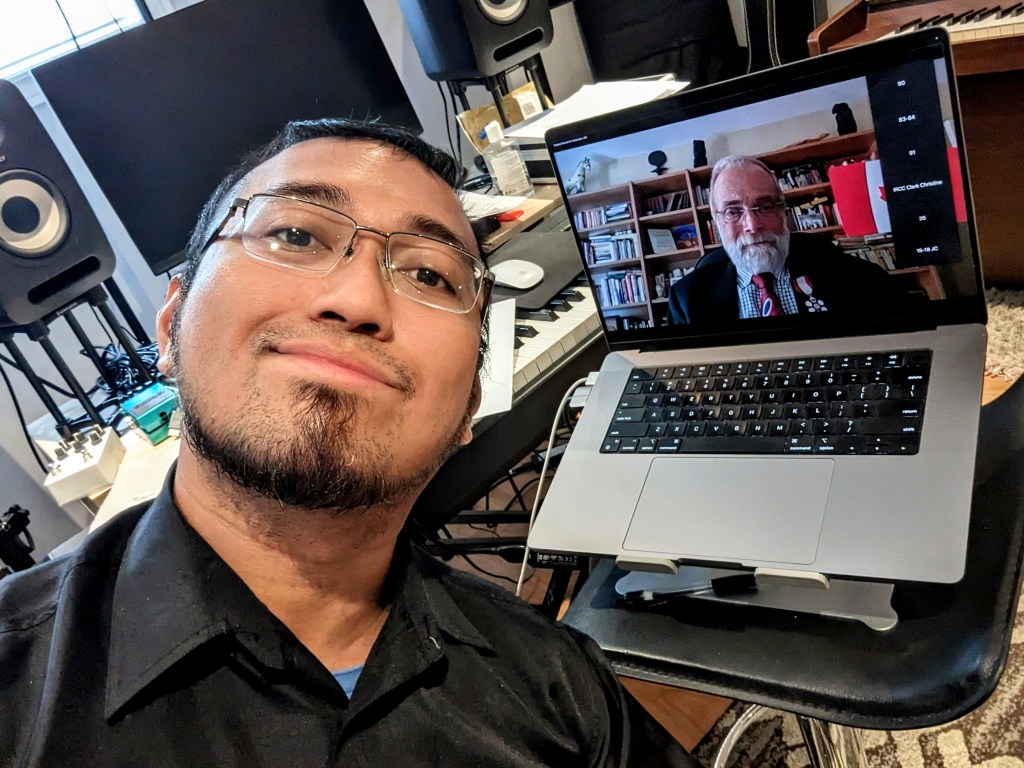
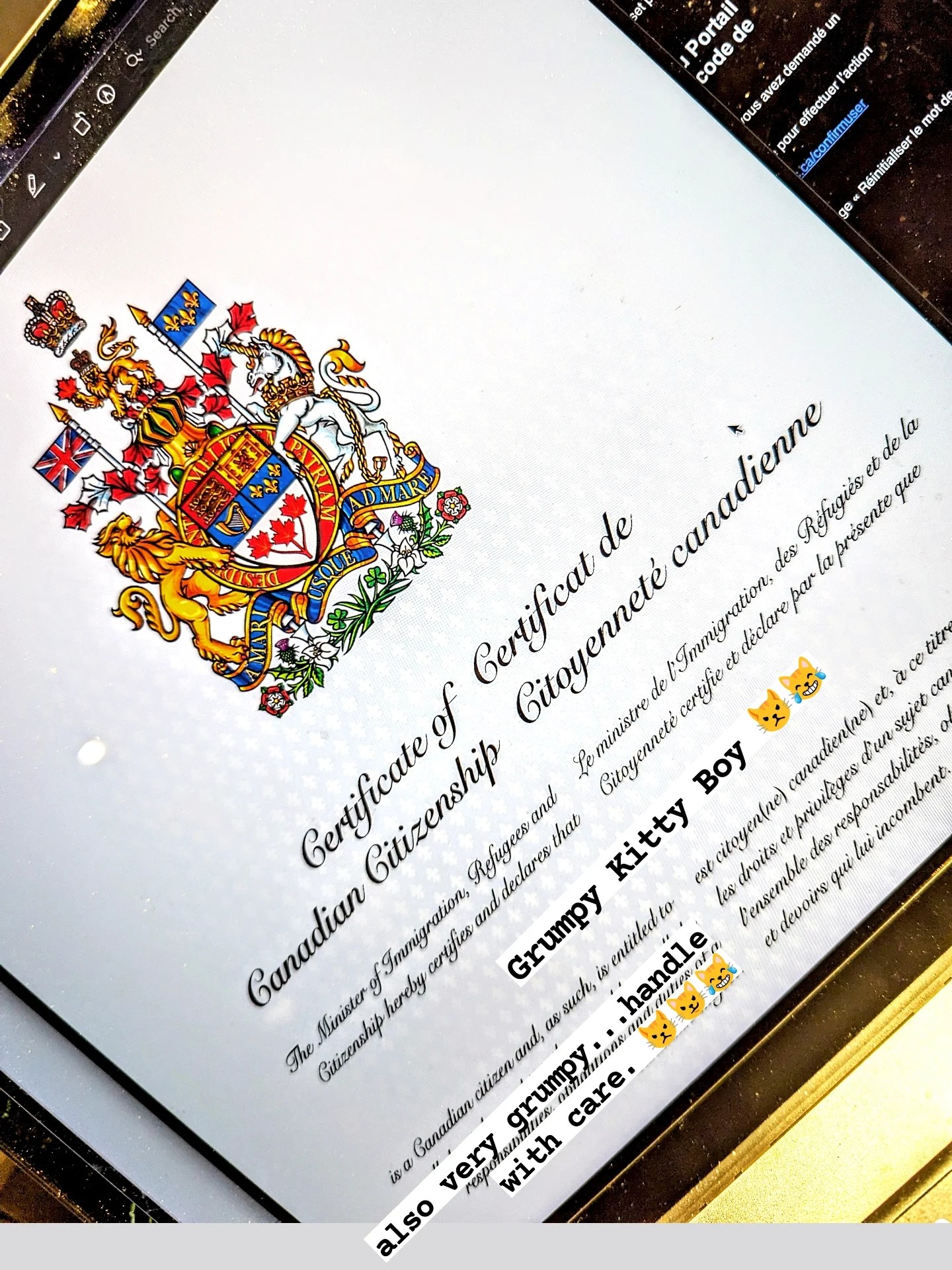
Getting Canadian citizenship was the biggest thing that happened to me this year. I find it serendipitous that this also marks my tenth year of living in Canada since that one-way flight from Manila. But nice things don’t come without the drama: IRCC initially scheduled my oath of citizenship in July, nine days before I have to travel to Europe. It is bad timing since the ceremony also requires destroying my Canadian Permanent Resident Card, which is the only travel document I can use to reenter Canada if I leave. I had to request them to reschedule it after I return, which finally happened in October.

Going to Europe during the summer was also a big highlight for me this year. But allow me to put context into this. Stepping into Europe from the Philippines for the first time 13 years ago was a big undertaking: I held a Philippine passport that restricted entry into places with needless travel visas. I was also just fresh out of college, I just started a contractual teaching job that doesn’t pay a lot, and my family background isn’t a luxurious one to die for. The combined factors of geopolitical leveraging with passports, economic scarcity (due to global flow of capital), currency powers, living standards, and institutional inaccessibility with expensive fees make mobility a hardship for many artists of the so-called Global South. Many people in North America might be surprised that such systemic barriers profoundly affect people like me. After 13 years of not accessing many opportunities like many colleagues out there, I finally got the chance to reach Europe again and finally catch up. There wasn’t even any fair competition: it was all rigged from the start, but that’s how systemic barriers work. I even wrote a long-form journalism piece out of this, but more on that later.

I will definitely miss 2023! Before we move on to the next year, I want to start reporting on the remaining highlights of this year.
- Kinalugarán at the Het Paviljoen (Ghent, Belgium)

Talking about borders is never easy nor out of fashion. We’re constantly bombarded with the presence and effects imposed by borders. Their ability to imprison us and render us invisible is a very significant reason why I created Kinalugarán both as live flute octet music (as commissioned by New Music Concerts) and an audio essay consisting of interviews with colleagues.
A year after the world premiere of Kinalugarán, this year’s curation team at the Het Paviljoen (Ghent, Belgium) selected the work in stereo audio essay form to be part of To Undiscovered Lands. This curated outdoor exhibition ran from May 4 to June 1. The presence of borders contributes to our continual absences — I’m grateful that the Het Paviljoen provided this platform to expand on such discourse.
- Would Virginia Woolf Contemplate Suicide if She Were Filipino? at the rEvolver Festival (Vancouver, Canada)
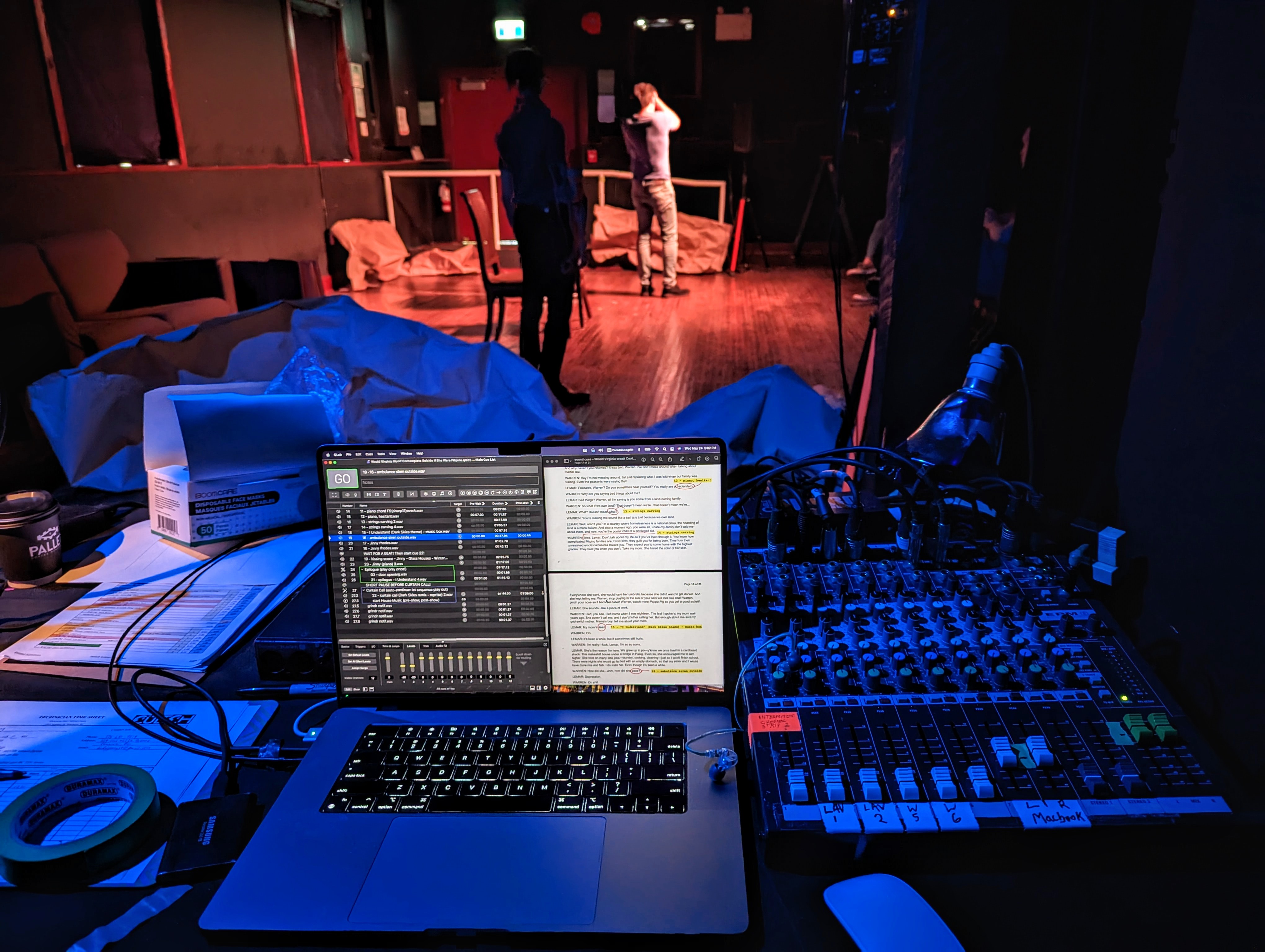
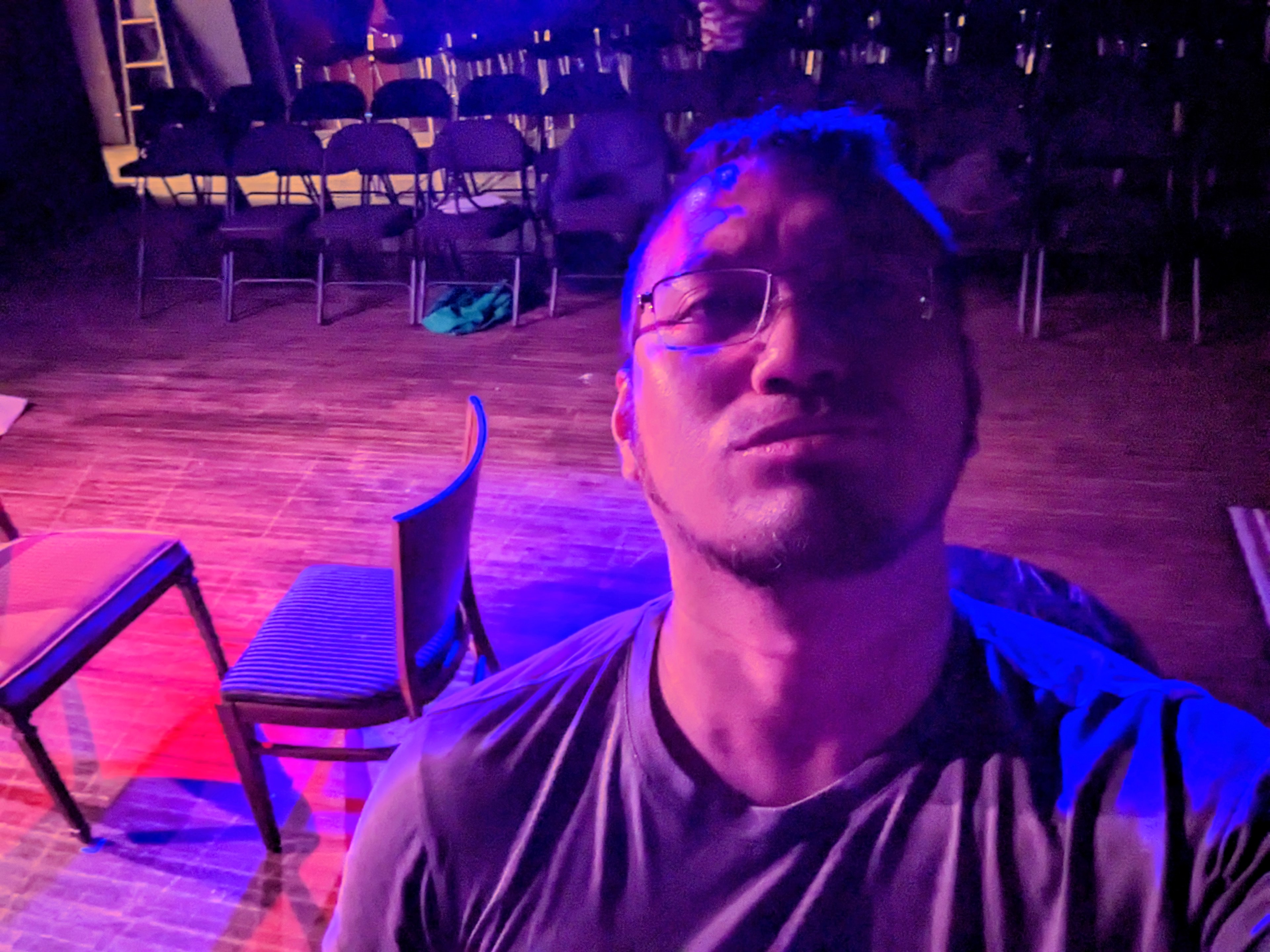
I completely thought that doing this project would be my first music theatre credit as music/sound designer, but I was wrong. Riley Palanca and I actually produced a politically-charged full-length radio play for CKUT 90.3 FM Montreal back in 2016! But doing so for Palanca’s Would Virginia Woolf Contemplate Suicide if She Were Filipino? marked my official venture into the theatre scene. Donning the pen name “Revan Badingham III” for this play, Palanca asked me to design the play’s sound world for its Vancouver production run (May 25th-27th) at the rEvolver Festival 2023. This was Grumpy Kitty Boy‘s cue into the scene: I provided existing synth pop tracks, repurposed others, and created new music as well under the overall direction of Dennis Gupa.
Preparations were tricky. As everyone in the cast and crew hails from different parts of Canada, we had to schedule travel times that involved rehearsing for one week in Montreal before flying to Vancouver to do multiple show runs. It was more than an artist residency for me — I was there to work full-time.
The project was also an eye-opener for me. Even while having an experimental streak in my work, I found that my conception of theatre was surprisingly “conventional.” Gupa tasked me into scoring a gay kissing scene that exposes the violent politics behind such kissing. I was taken aback: I already had a repurposed Grumpy Kitty Boy track to go with the scene. “I want to hear sounds of protest, I want the scene not to be objectified, I want something political,” Gupa suggested. After much thought, I realized: sound art is the answer! I gathered audio clips from one of the protests following the Stonewall riots and a reportage on the murder of transgender Jennifer Laude (who US marine officer Scott Pemberton murdered in the Philippines). I asked Palanca if they have existing texts that could juxtapose with these sounds and the action onstage. Luckily, they have a poetry piece that I eventually made the main actors record their reading as a pair. Not only was I able to juxtapose all of the sounds into a Grumpy Kitty Boy patchwork for the scene, but the poetry reading transformed into a prologue track (riding through the Montreal subway) that begins the whole play. Palanca was first hesitant about the risk of capitalizing on trans violence with the Jennifer Laude element — Gupa and I argued that it’s not about capitalizing it but merely exposing it, even pitting it in stark contrast to the liberal politics that allows Filipino gay hookups to flourish in North America.
I realized that if theatre is so much involved in building meaningful discourse for their world-building, how come we don’t practice the same dedication to discourse with contemporary music?
- Publication of “Levy Lorenzo Maximizes the Human Algorithm” in Musicworks #145 (Summer 2023)
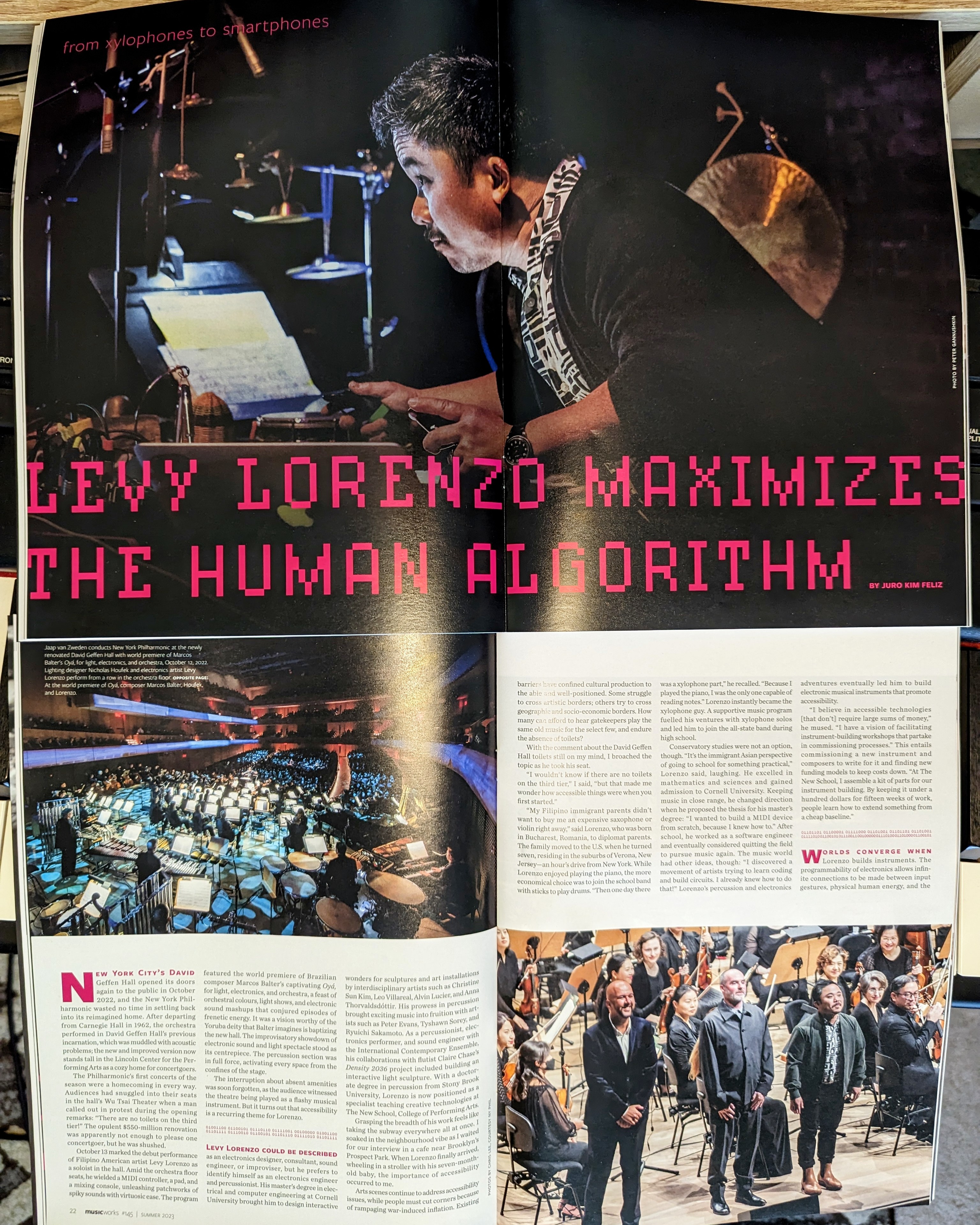
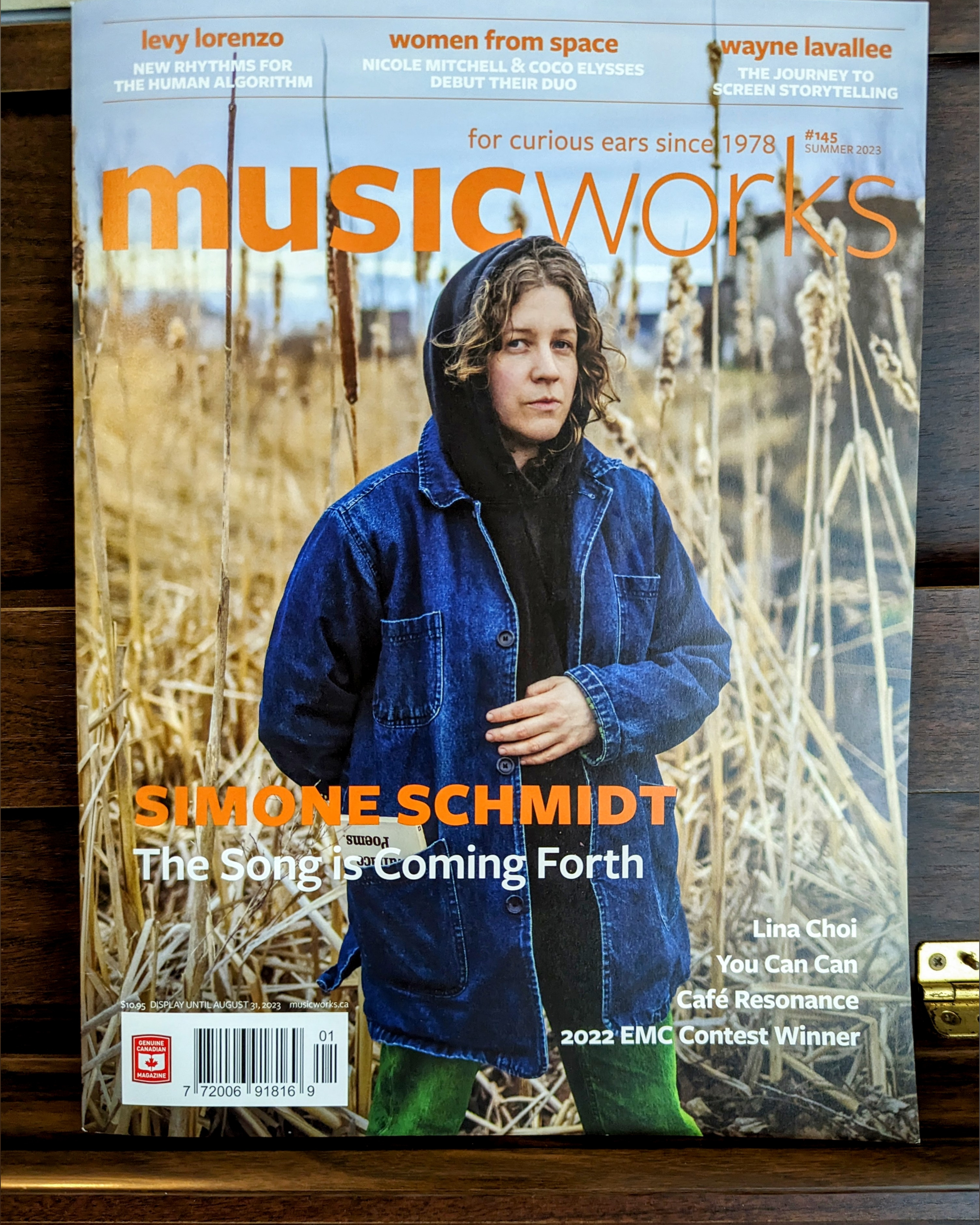
My New York trip in October 2022 hit many birds with one stone. While I was mainly there to undergo mentorship with koto master Masayo Ishigure for a full month, I found myself an opportunity to schedule an interview with Filipino-American artist Levy Lorenzo. In a nutshell, Lorenzo wears many hats, most often related to either percussion, electronics, or anywhere mixing the two. Our conversation became the magazine feature article I wrote for Musicworks, published in this year’s Summer issue. (The article isn’t available online yet as of this writing). I met flutist Claire Chase and composer Du Yun later on in Darmstadt, who both told me that they found the article aptly covering a lot of ground with Lorenzo’s artistic work.
The conversation ran deeper than the published article, as often is the case. I remember Lorenzo reflecting on what-ifs after chatting in a cafe: What if his parents didn’t decide to move to New Jersey? Would he grow up in the Philippines and be another engineer from Ateneo de Manila University just like others in his extended family? Would he still be the successful musician he is now? As he pushed the stroller where his then-seven-month-old baby accompanied us all the way, I shrugged inside. Knowing the Philippines, I highly doubted that he would. I think that in the eyes of those who are “from here,” diasporic life can be masked by the everyday mundane and the ongoing sociopolitical realities. It is rare that we engage in the alternative: what if this person’s family never moved here? Would this person’s absence in such hypothetical scenarios matter? Whose politics would remain dominant in their absence? Will equity and diversity in the arts be a reality under greater forces who could easily strangle and suffocate such pursuits of justice?
More details on Musicworks #145 (Summer 2023) HERE.
- Participation in “In Situ – Translucent Spaces” with Klaus Lang (impuls Academy: Graz, Austria)
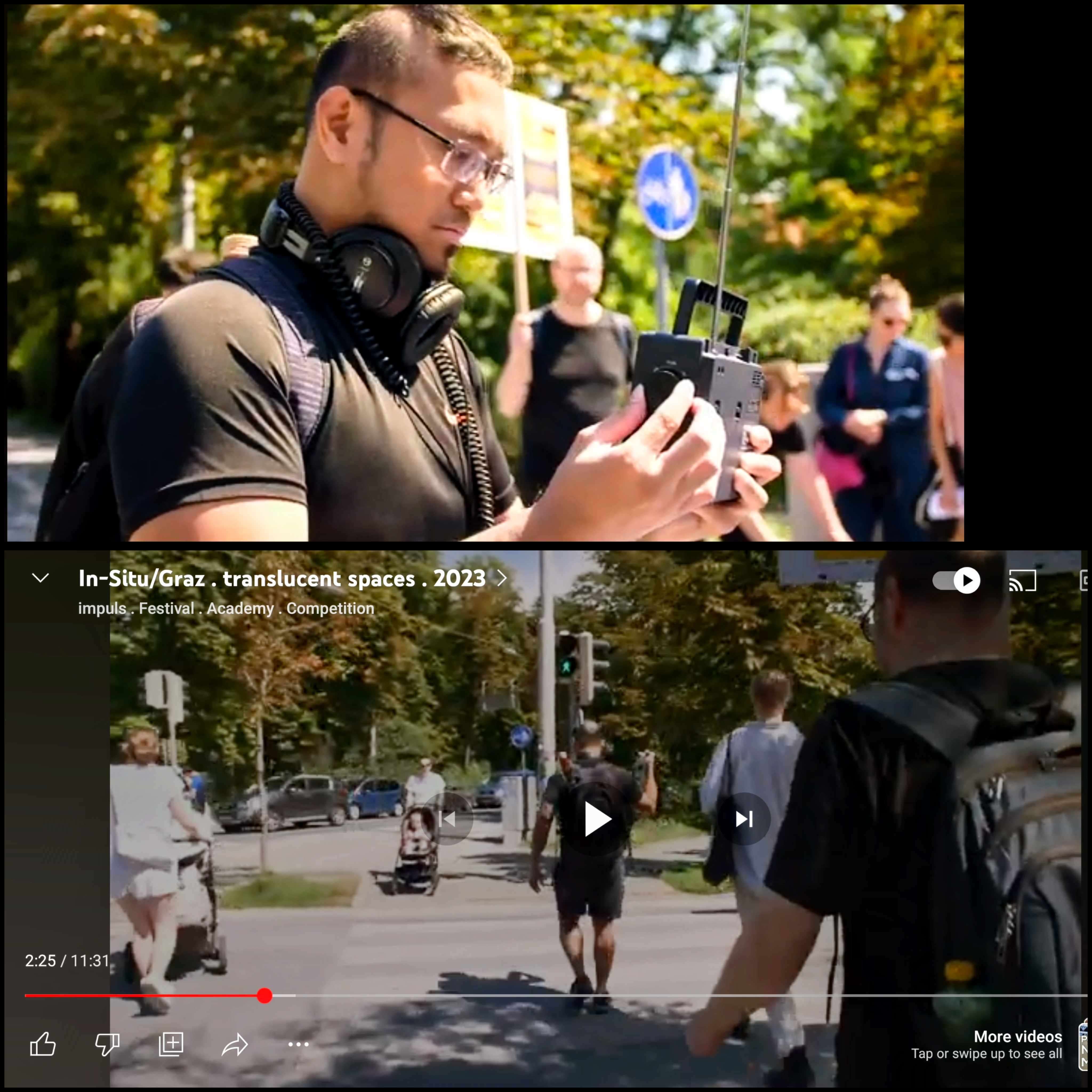
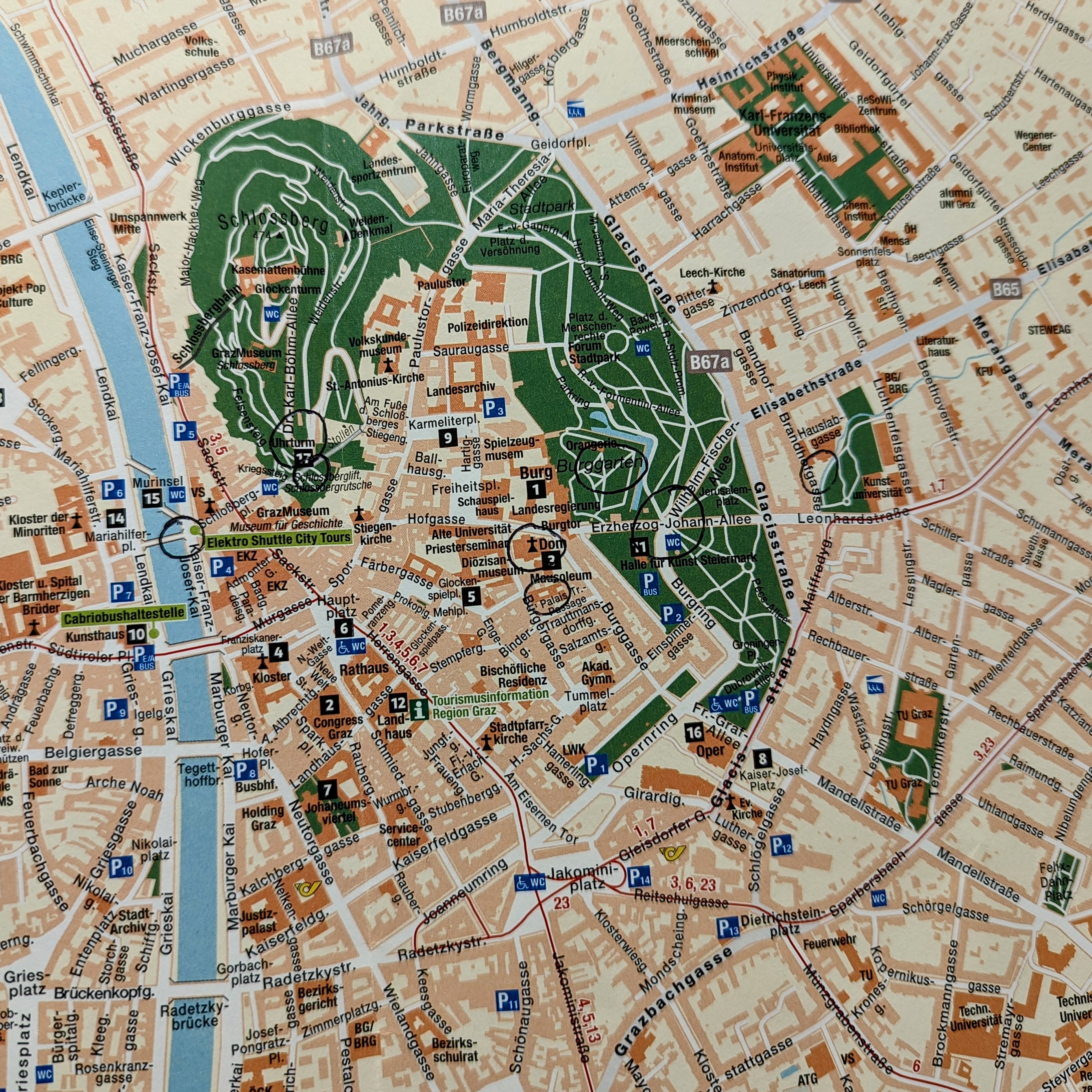
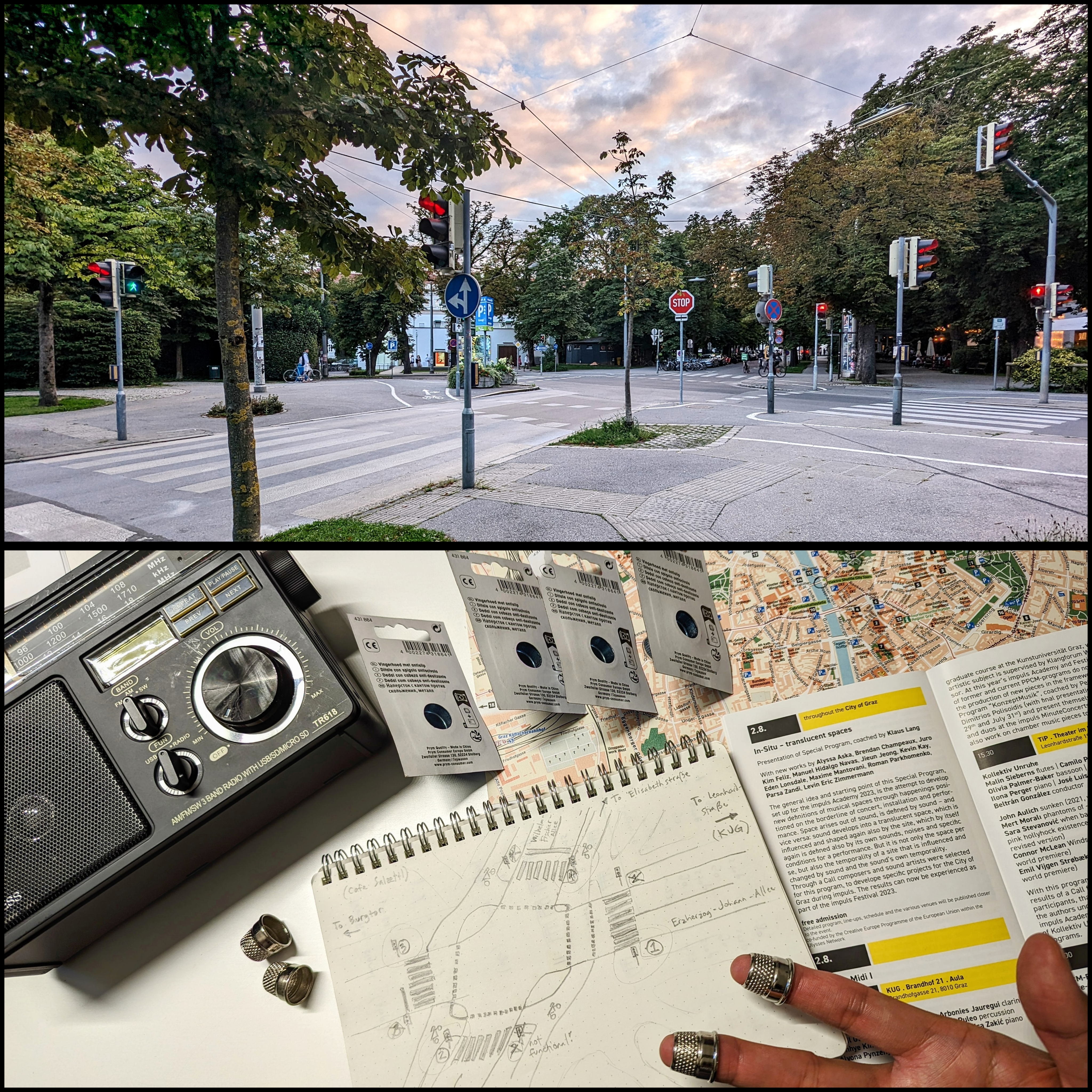
I tucked away my shortwave receiver, rainstick, and some possible ideas for a sound activity into the luggage. Flying out to Graz in mid-July, I was selected to participate in a workshop where the goal is not to create a piece but to engage with city soundscapes. With my commitment to unpack “spatiality” into my own musical practice, this would be my first exercise to think outside my “composer box.”
The whole output for the “In Situ – Translucent Spaces” workshop was a collaborative effort. With Klaus Lang facilitating our working sessions, I ended up materializing two events for our scheduled “sound walk.” Out of these two contributions, I grew fond of my idea in designing an event surrounding a traffic light intersection where audible traffic signals produce visceral and spatial movement. My task, I decided, was to amplify “presences” on that particular site, whether through people synchronizing rhythms with the audible signals using metallic soundmakers or through my shortwave receiver “improvisation” that sounds out invisible analog radio signals in the area. It became a “ritual” for me to guide people in walking around the intersection while soundmakers take cues to start and end sounds. We entered the site without any grand gestures, and we left it the same way. City life goes on, unperturbed.
impuls Academy produced video documentation of our sound walk, seen below.
- Writing “Words on Music” with a catch: it has to be about (pseudo-)global diversity (Darmstadt Summer Course: Darmstadt, Germany)
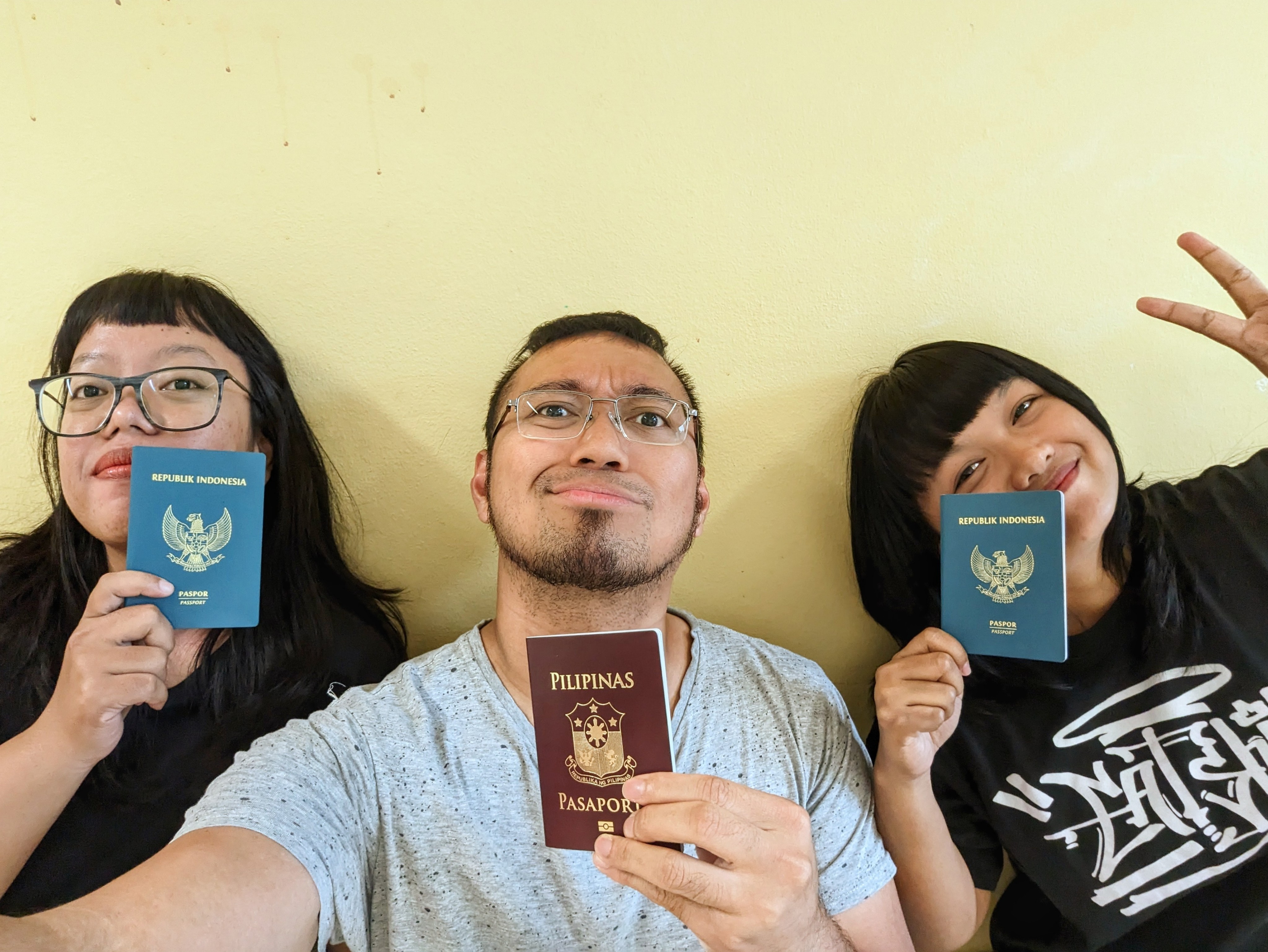
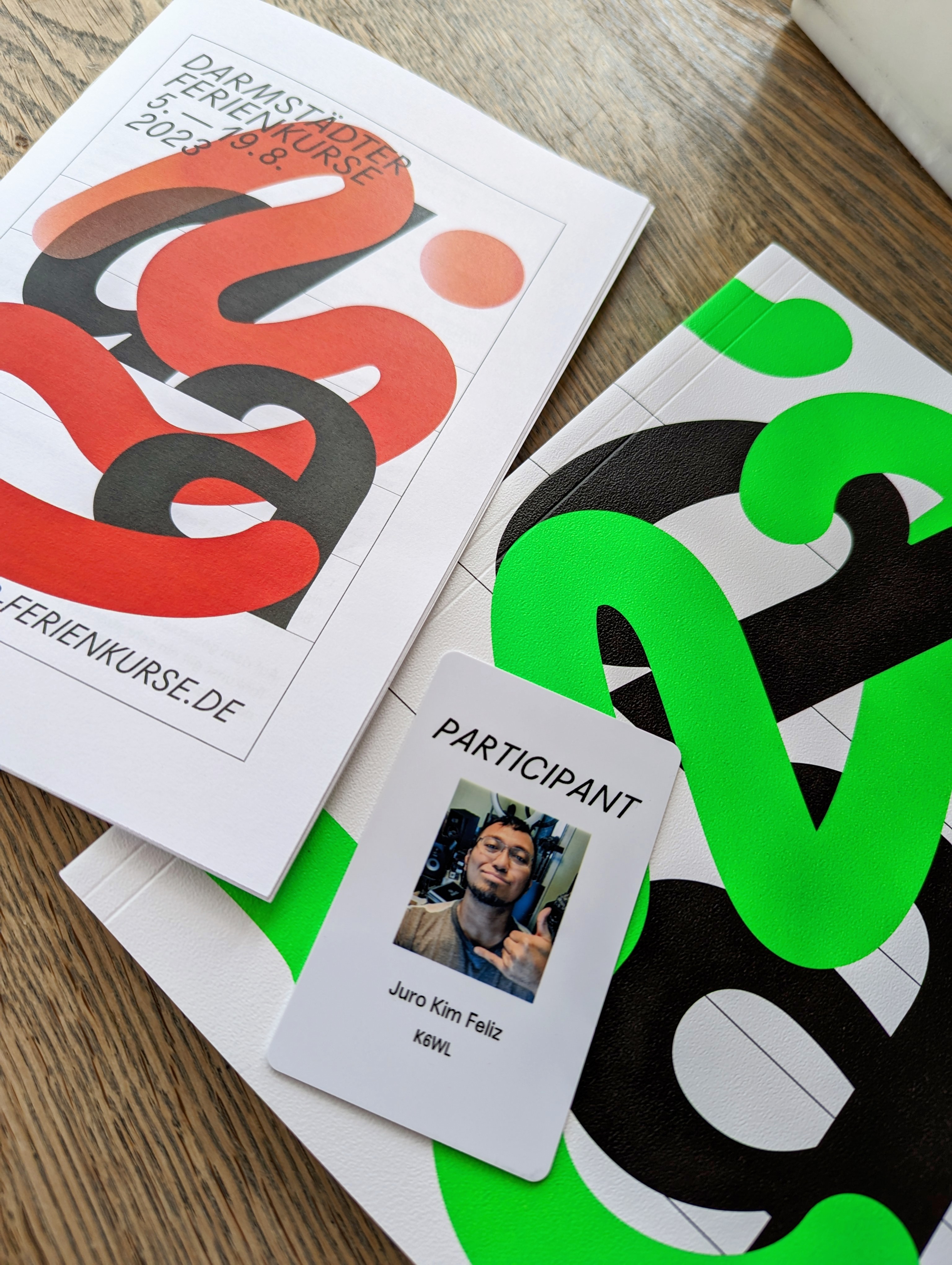
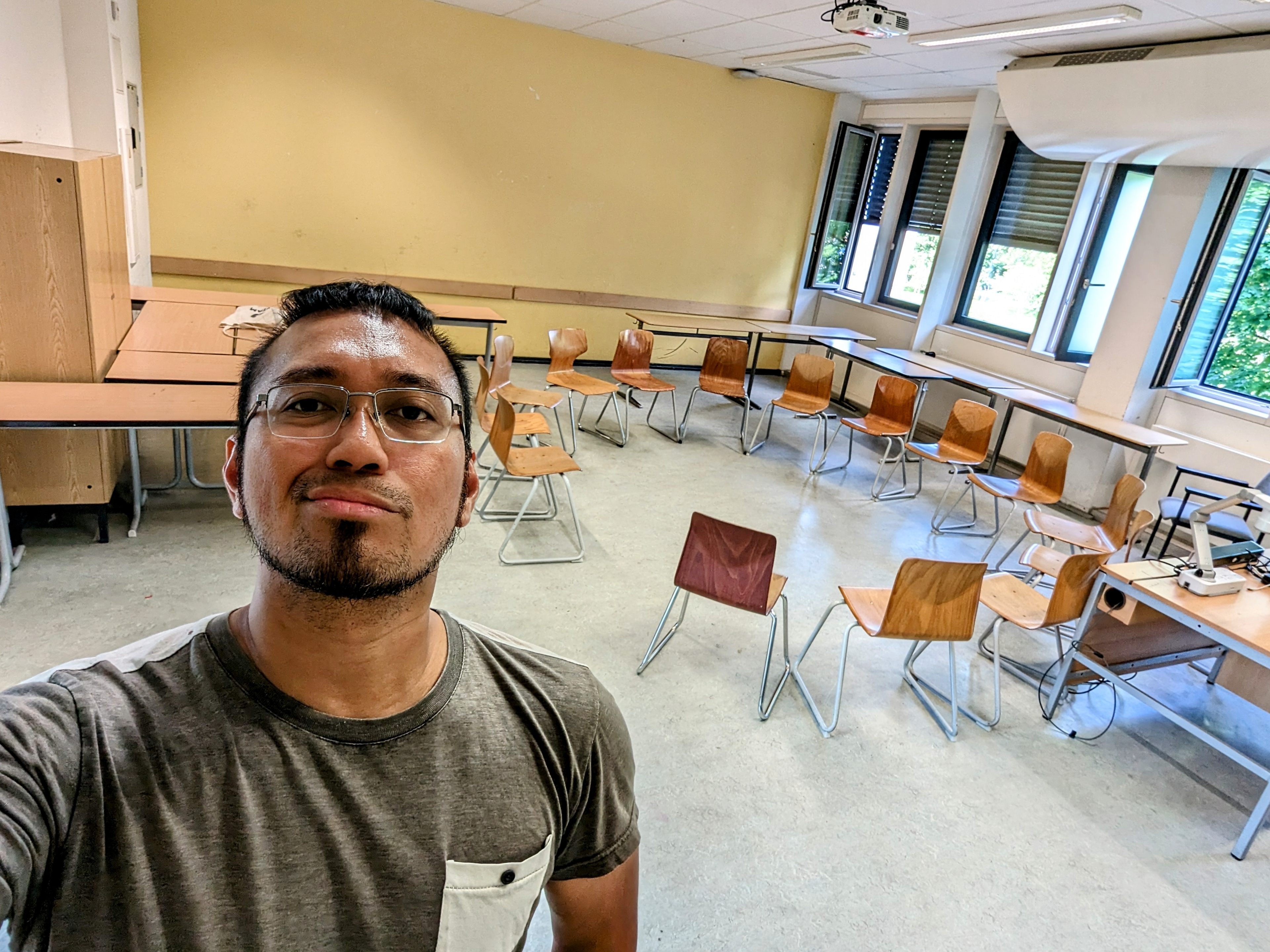
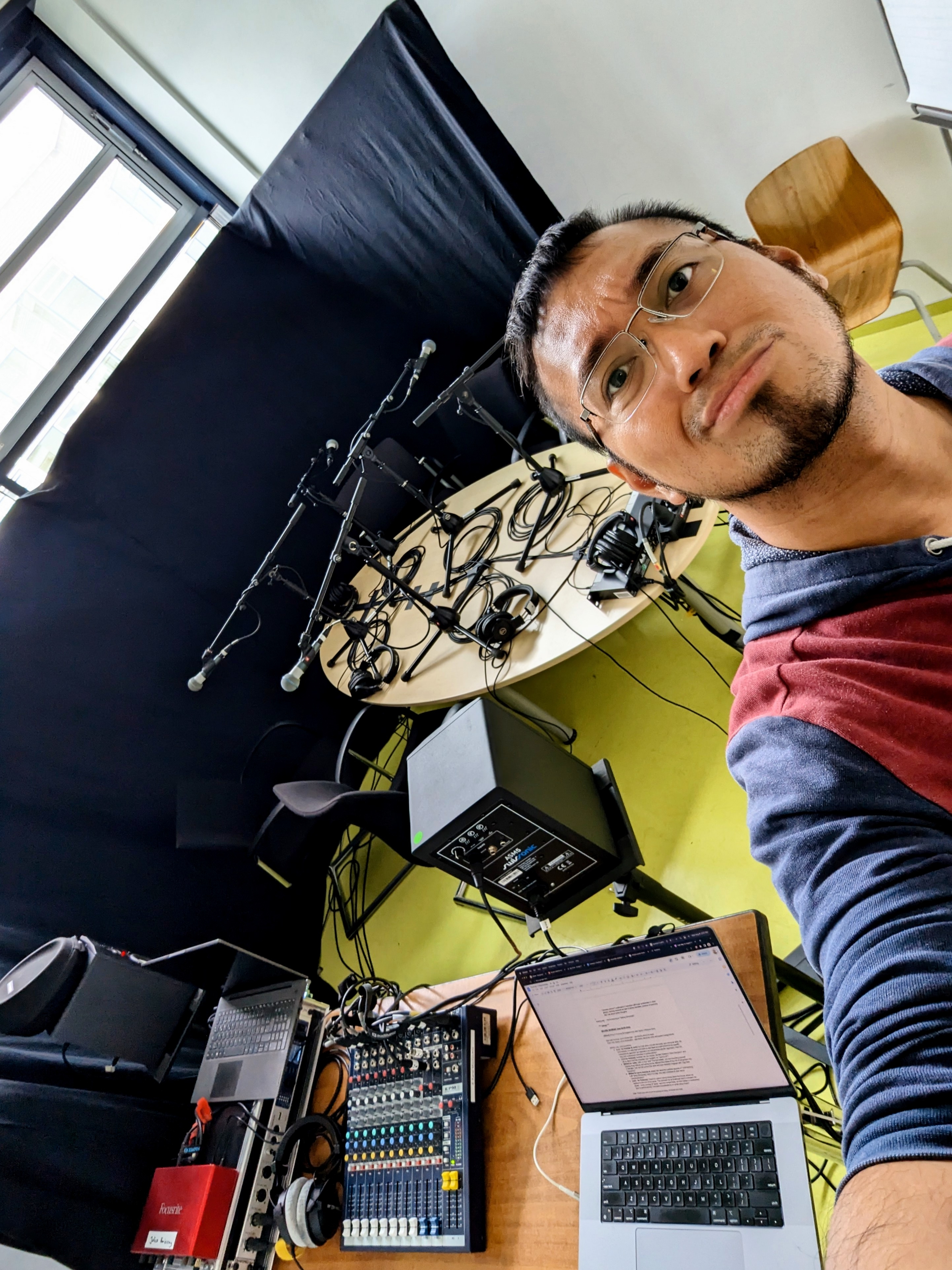
I carried baggage as I quickly hopped from Austria to Germany during the first week of August. I first came to Darmstadt 13 years ago. The Darmstadt Summer Course is still quite a force as I recalled contemporary music history would say. It is a centre of gravity: people would understandably come in and out of its spaces, its productions of musical discourse and experiences would still ripple over. Those who were able to secure spots the moment registration period opened up (and also filled up within a very short time!) are the privileged ones. If you recall my preamble to my summer trip above, I only have the flattest-sounding word to describe it: “unfair.”
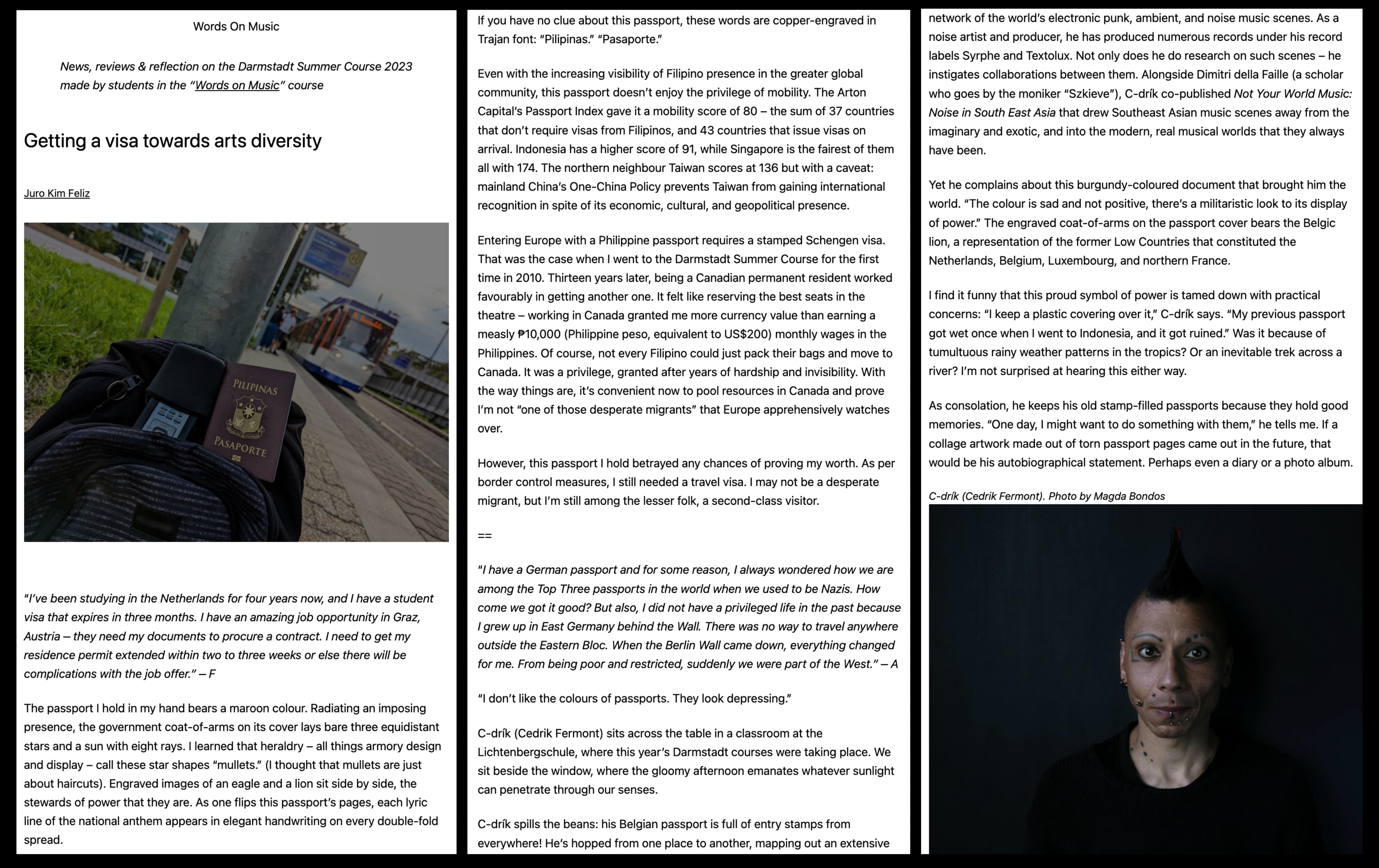
But I was here to participate in the Words on Music music journalism workshop with Kate Molleson and Peter Meanwell. Writing a long-form article on visas and global travel was my number one goal. In fact, I already had the story going in my head two months before the fact. Because of my travel circumstances, acquiring my Canadian citizenship had to be put on hold. That would mean joining the collective fray of getting a Schengen visa to enter Europe with a Philippine passport. It was a waste of time, effort, and money just to get access to European soil. And again, quite “unfair” when you realize that North American colleagues don’t have this hurdle — let alone even know what a “Schengen visa” is!! (Not knowing that this exists is one of the most offensive thing I’ve ever heard. The privilege is too much to bear). Without any arts funding support under my belt, I had to face the music alone.
The rest of the Darmstadt experience this year may have to be a separate post. I would have to say that institutions still perpetuate systemic barriers, and my thoughts are not of the savoury type. I had to step out of our group dynamic at the end of it. I’ve long thought if I was merely overreacting, but such gaslighting on oneself also manifests lingering systemic oppressions that remain unaddressed. I had to be graceful to myself at the end of it.
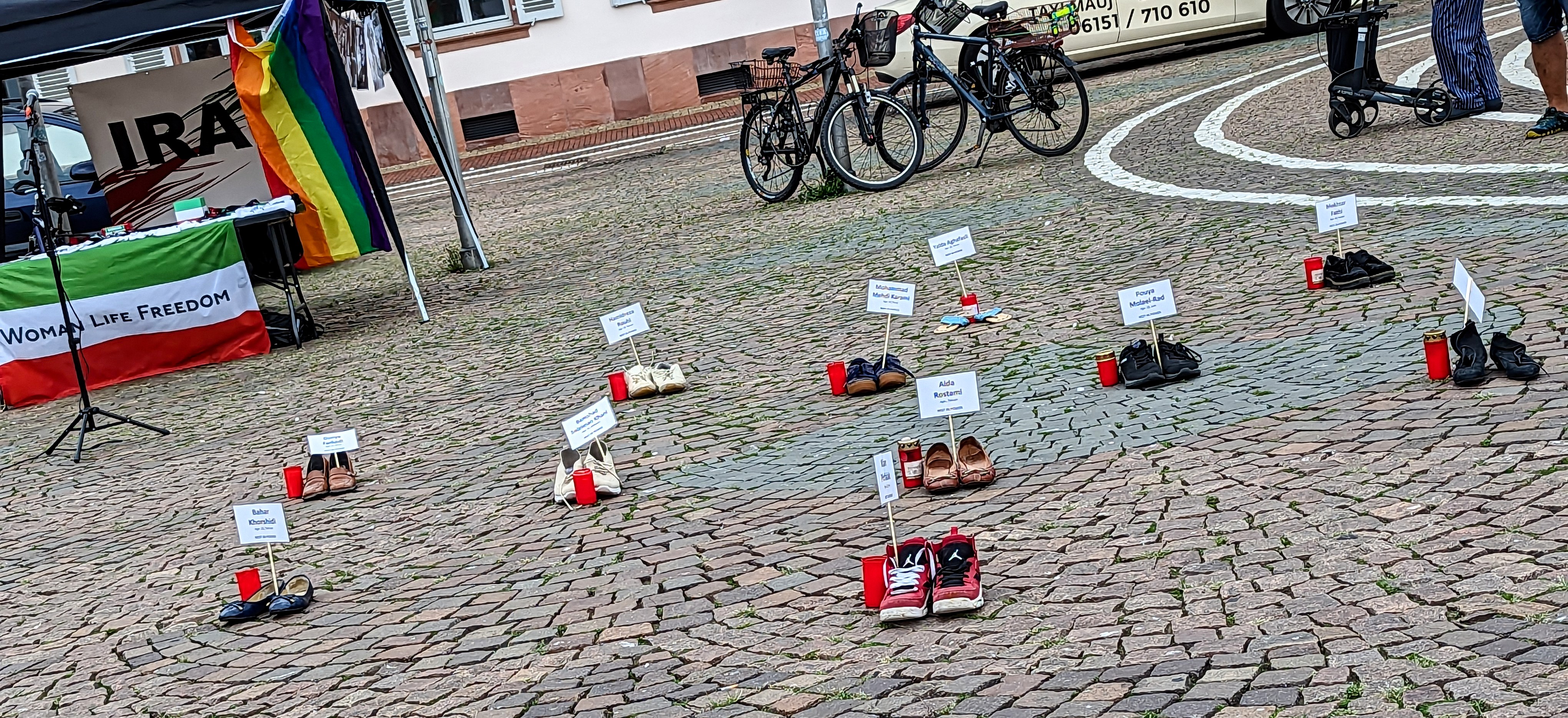
On the brighter side, the article I wrote for “Words on Music” got me the opportunity to meet artists like Cedrik Fermont, the Duo Sarana (from Indonesia), Antye Greie-Ripatti a.k.a AGF a.k.a. “Agee,” and others from different places who I felt kinship with. I also have to trust the power of words and rhetoric this time. Music as “sound objects” won’t fight oppressions; the written word does. I found it symbolic when I stumbled on a Woman Life Freedom protest at Luisenplatz one afternoon, outside the four walls of the Darmstadt Summer Course. This non-collision of worlds got me thinking: What is the Summer Course’s role on unraveling political realities? What is music journalism in the face of global turmoil? My audio piece has to capture this disjuncture somehow, hence, the eulogies spoken during the protest that weave alongside excerpts of C-drík’s interview and recorded running trams.
Read my article “Getting a visa towards arts diversity” featuring C-drík, the Duo Sarana, and many other voices who mattered in such conversations (click HERE)!
Listen to the accompanying sound piece “ewig warten…” below (featuring C-drík and yours truly). Open the track on Soundcloud to read the sound piece description.
- Artist residency at Willapa Bay AiR (Oysterville, WA, United States)
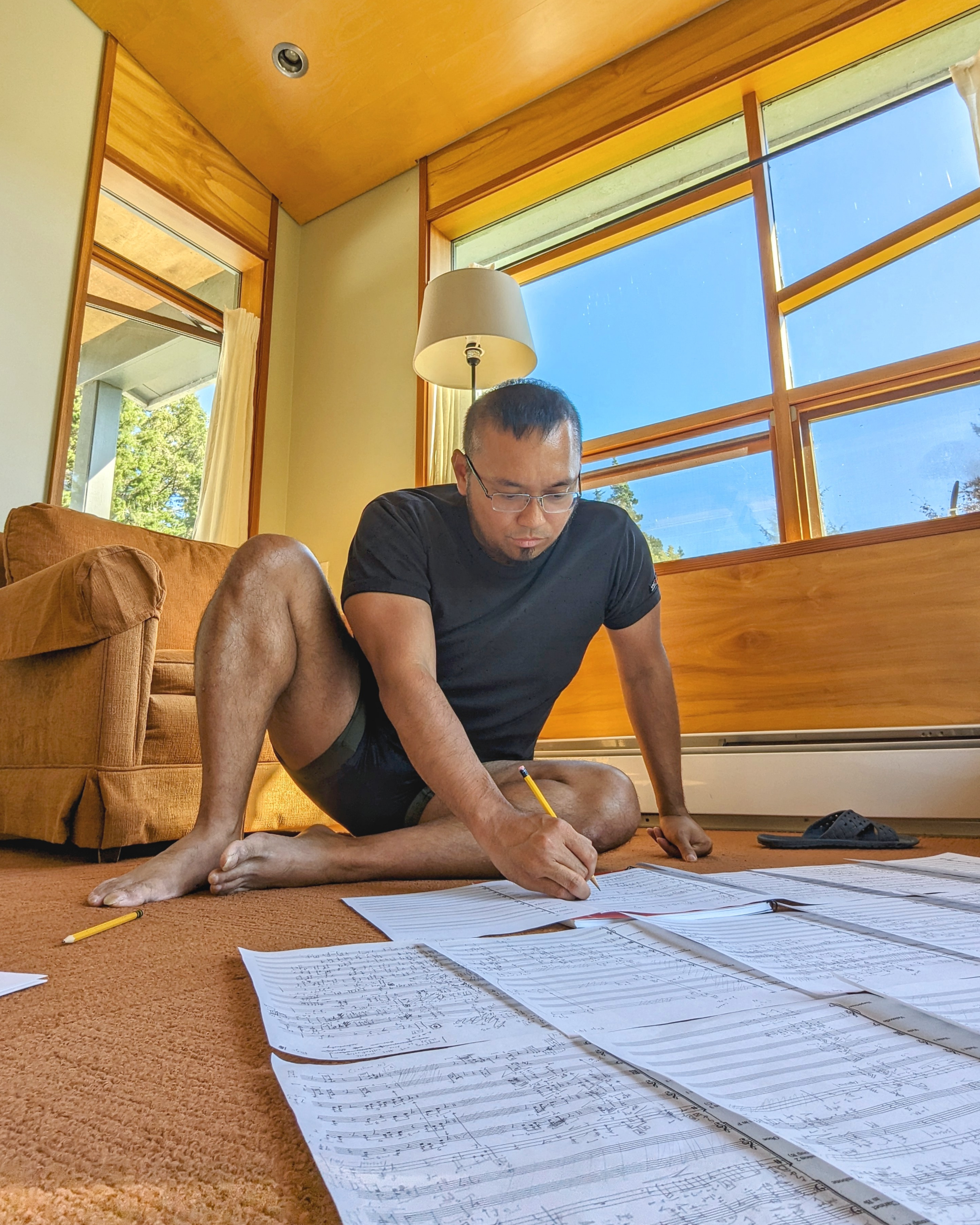
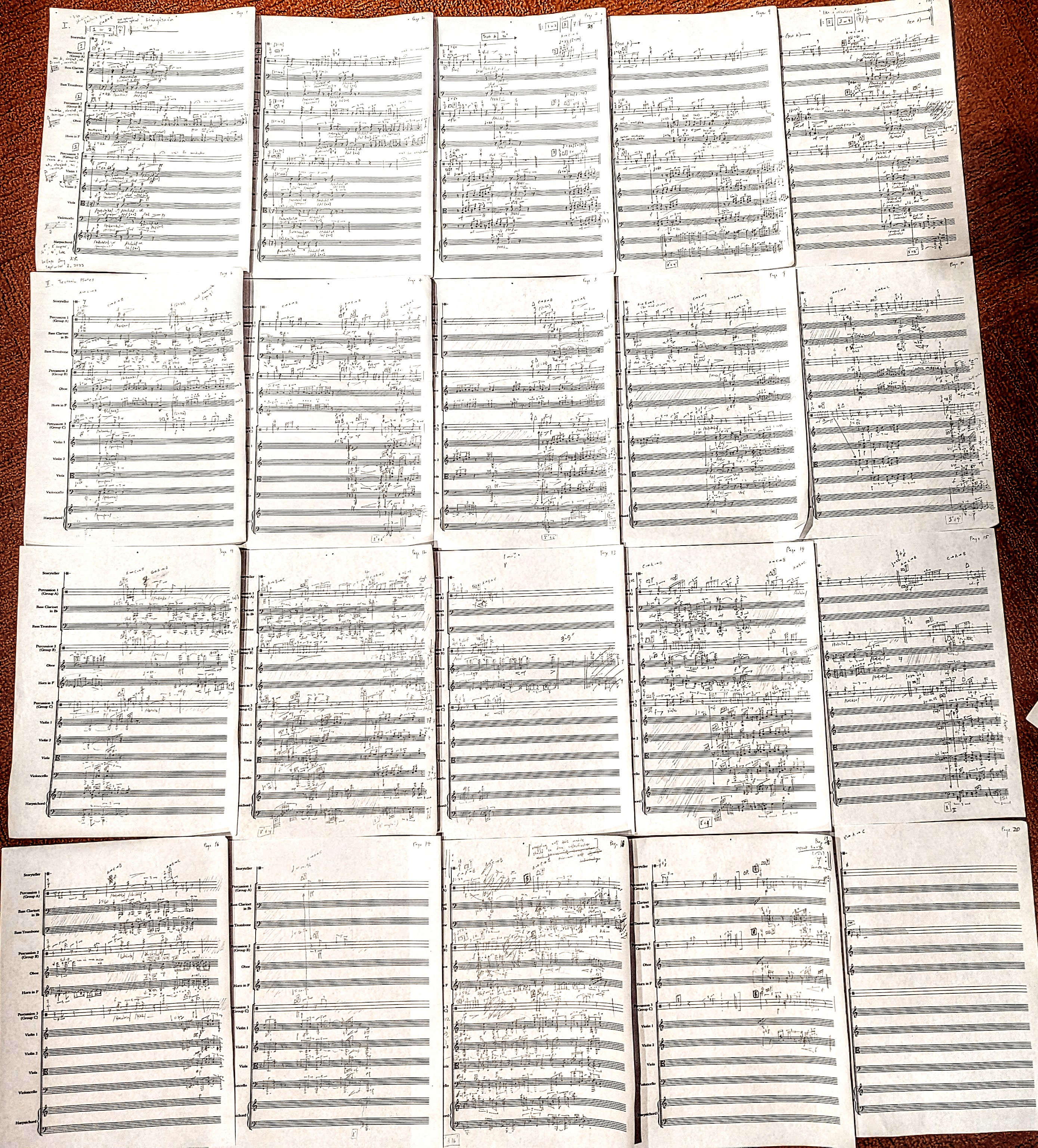
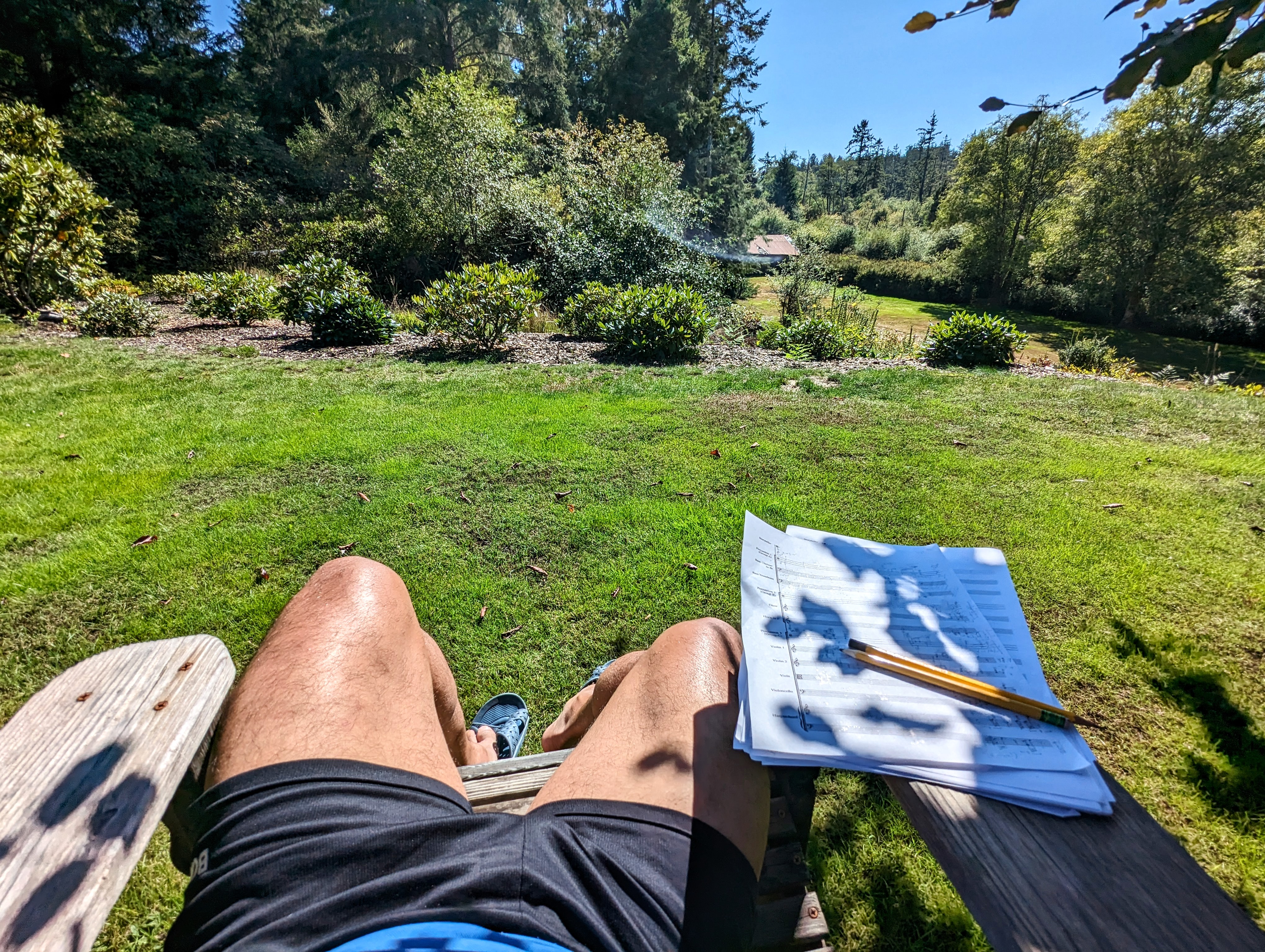
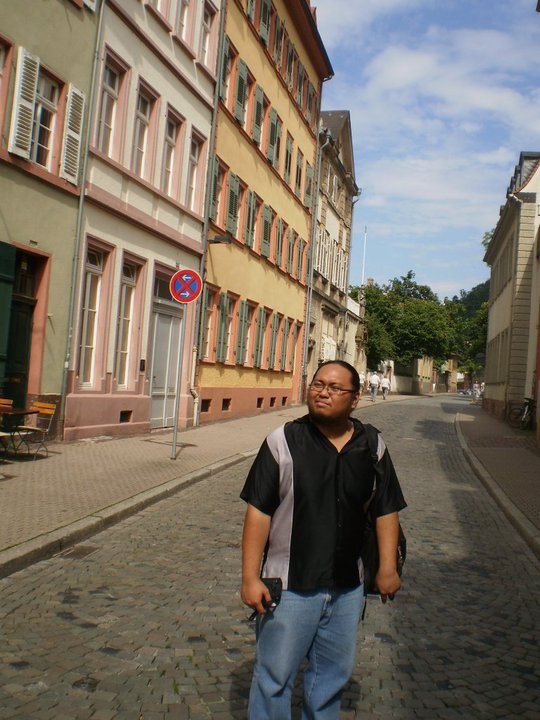
I had day trips in Heidelberg, Köln, and Hamburg during my Frankfurt stay after the Darmstadt Summer Course. I went home back to Toronto for barely a week, and suddenly I’m jammed once again into a flying metal machine to the United States for a September artist residency. Willapa Bay AiR is quite a charming remote place, situated in a two-mile-wide peninsula on the Washington coastline. On one side of the peninsula, you see the humongous dumping site of around seven river systems (seven, if I recall correctly!) that is the Willapa Bay. On the other side, you see the raging Pacific Ocean.
I’ll try to keep this part short, since my sole mission was to finish the commissioned work Kinagisnán for the whole of September. I spent endless hours writing music everyday! The challenge was exciting at first, until you realize that your sanity and health fades away over time.
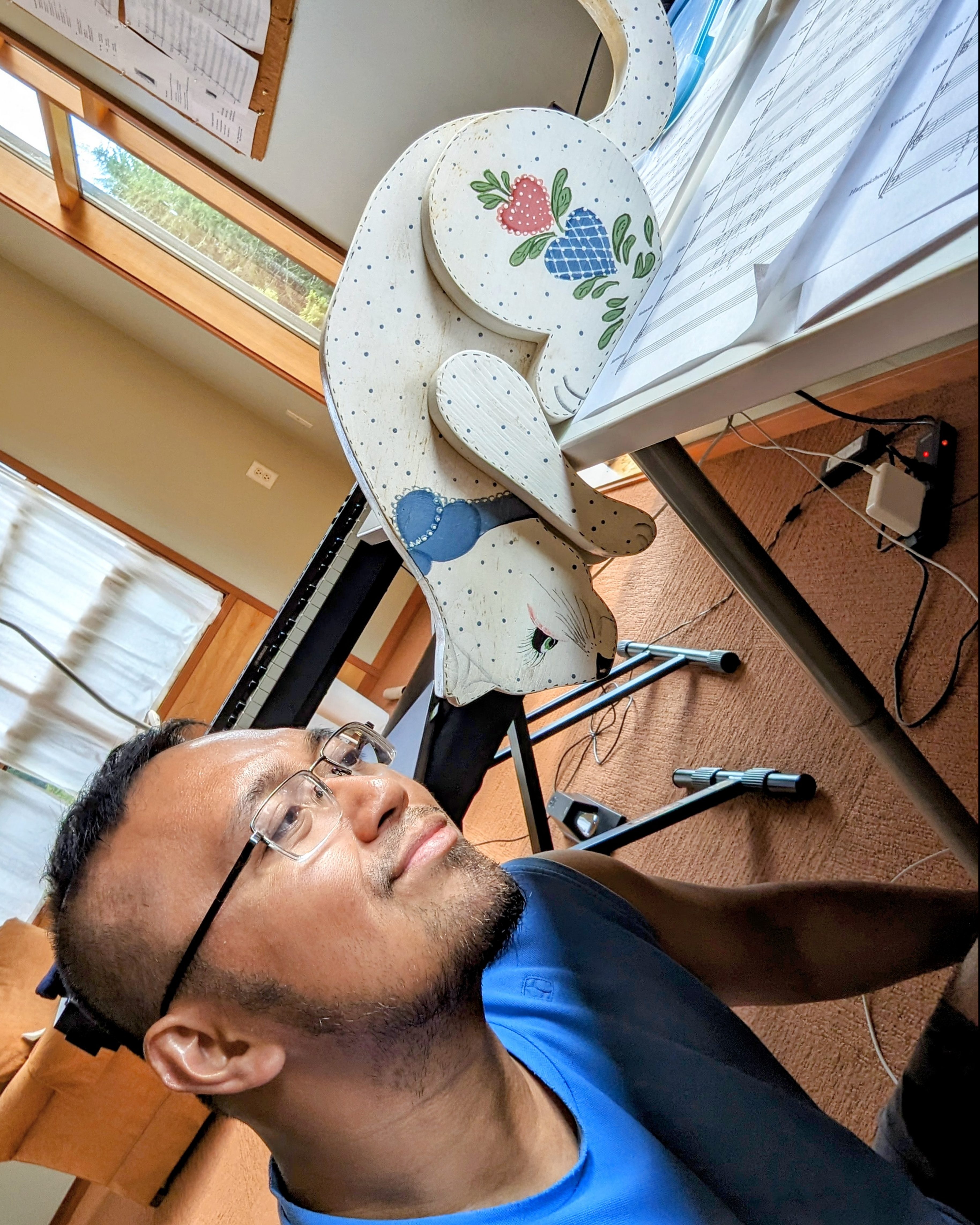
On the brighter side, I met my grumpy spirit animal! Who knew that there’s a 1980s grumpy kitty wooden model in one of the local stores at Ocean Park?!
- World premiere of Kinagisnán featuring Patrick de Belen
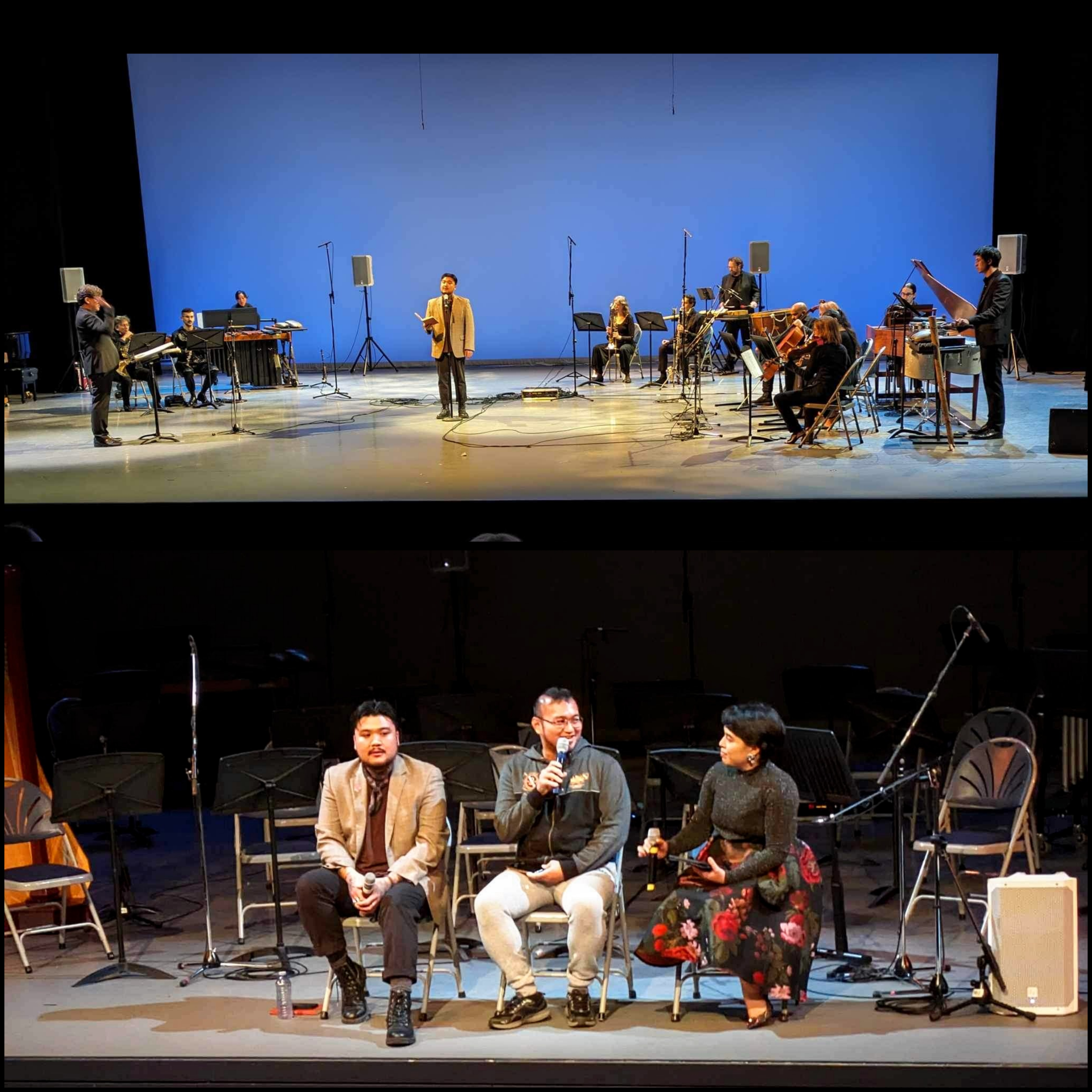
I remember sitting across Patrick de Belen in a coffee shop one afternoon. This coffee shop is merely blocks away from where we both live. We were neighbours all along and I knew it for a long time; he did not. It was not surprising at the very least, as Filipino communities tend to huddle together in very interesting ways. (One interesting thing: at least in Toronto and Montreal, we are always in close proximity to Jewish communities, the same way that this dynamic plays out among many overseas Filipino workers in Israel and the Middle East).
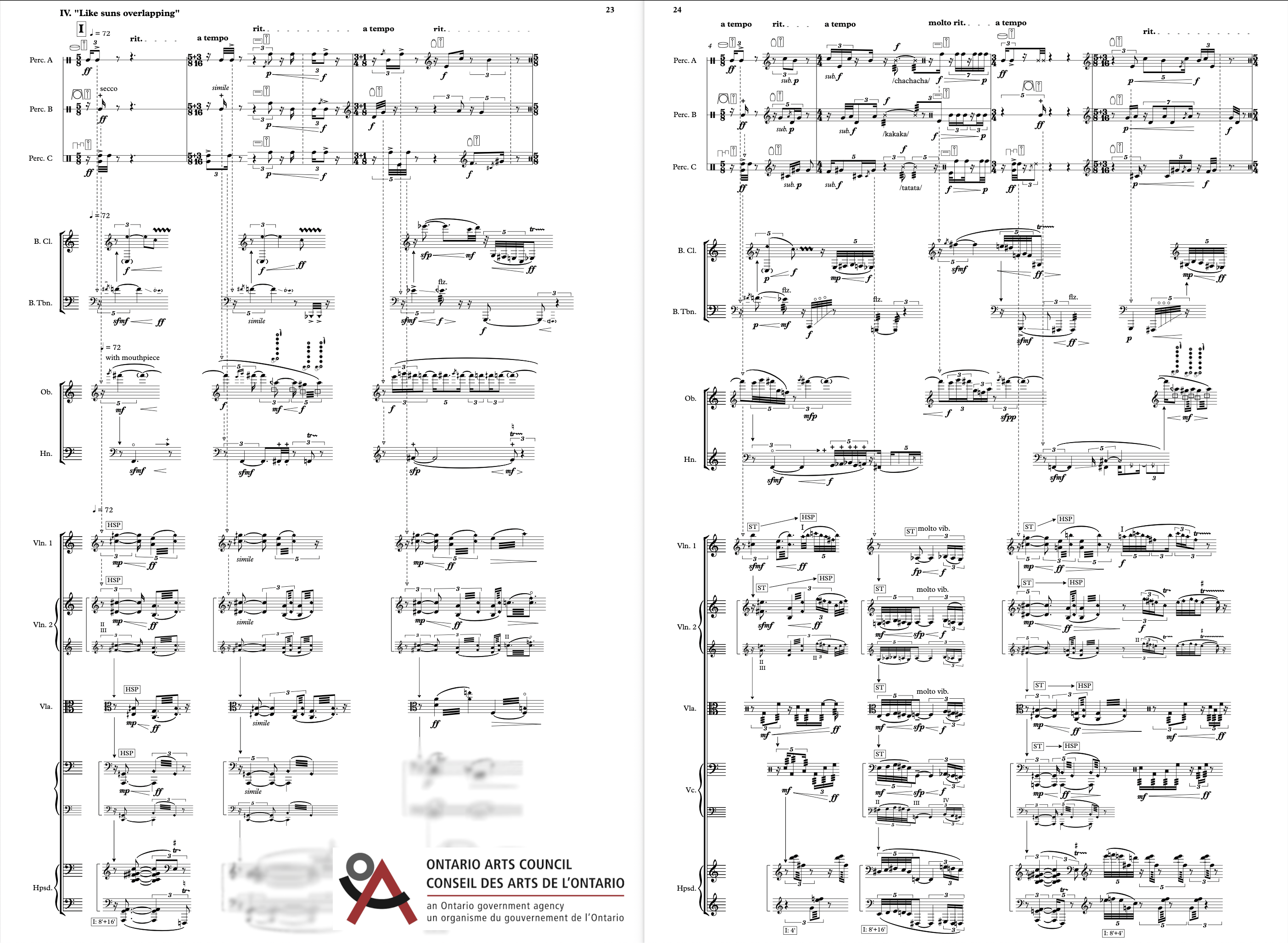
I commissioned de Belen to write poetry and appear as a guest performer for the world premiere of Kinagisnán, scored for spoken word and an ensemble of twelve (12) musicians. This served as the third and final commissioned project from New Music Concerts since I became their composer-in-residence in 2022. I told de Belen about creating an opportunity to fuse spoken word with contemporary music and possibly complicate their intersections. Nostalgia and tradition among the Filipino diaspora were themes that stuck in my head as I first conceived the project. With small ensemble groups spatialized across space, I imagined one of them resembling a Baroque ensemble. (I guess it’s also another opportunity for me to gain writing experience with the harpsichord!). While de Belen finished the poetry pieces during my time at Willapa Bay AiR, the difficult battle has just begun for me towards finishing the music.
After a very stressful time, I finally completed the work and submitted all materials at the end of October. Days leading to the world premiere on November 26th, artistic director Brian Current asked me for suggestions on additional resource persons to join our pre-concert chat. I quickly got the idea of contacting mezzo-soprano Renee Fajardo since she was in town for a Messiah performance. Little did I know that NMC would get her to host the actual pre-concert chat with me and de Belen. I only realized it minutes before we were to set off onstage. It dawned on me that this is the kind of Filipino representation in contemporary music stages — spoken word artist Patrick de Belen on one side and mezzo-soprano Renee Fajardo on the other side — that we never see outside the Philippines.
The creation of Kinagisnán was made possible with the support of the Ontario Arts Council. With its world premiere, I conclude my composer-in-residence role with New Music Concerts. Big shoutout to Patrick de Belen for a very meaningful collaboration that I hope would open more horizons.
 Juro Kim Feliz