N.B.: This page is a current work in progress as I continue building my writing portfolio.
Magazine features

Where Sky Islands Meet Forest Rhythms
Published in Musicworks #152 (Fall 2025). Photos by Rajesh Kumar Singh and the Something Else! Festival.
Check back later for online access.
Natural environments mould ecosystems and identities – Filipinx-American interdisciplinary artist and Pulitzer Prize-winner Susie Ibarra knows this first-hand. With jazz and avant-garde beginnings as a percussionist and composer, her artistic practice expands into opening ears and minds to the rhythms of forests, waters, and geological landscapes. But are natural environments simply fodder for creativity? Attending the Zula Presents Something Else! Festival in June 2025, Juro Kim Feliz explores the place where sky islands and rhythms converge, whether in Ibarra’s research and creative work, in a much-needed advocacy for climate justice, or simply in hearing birds sing in their natural habitats.
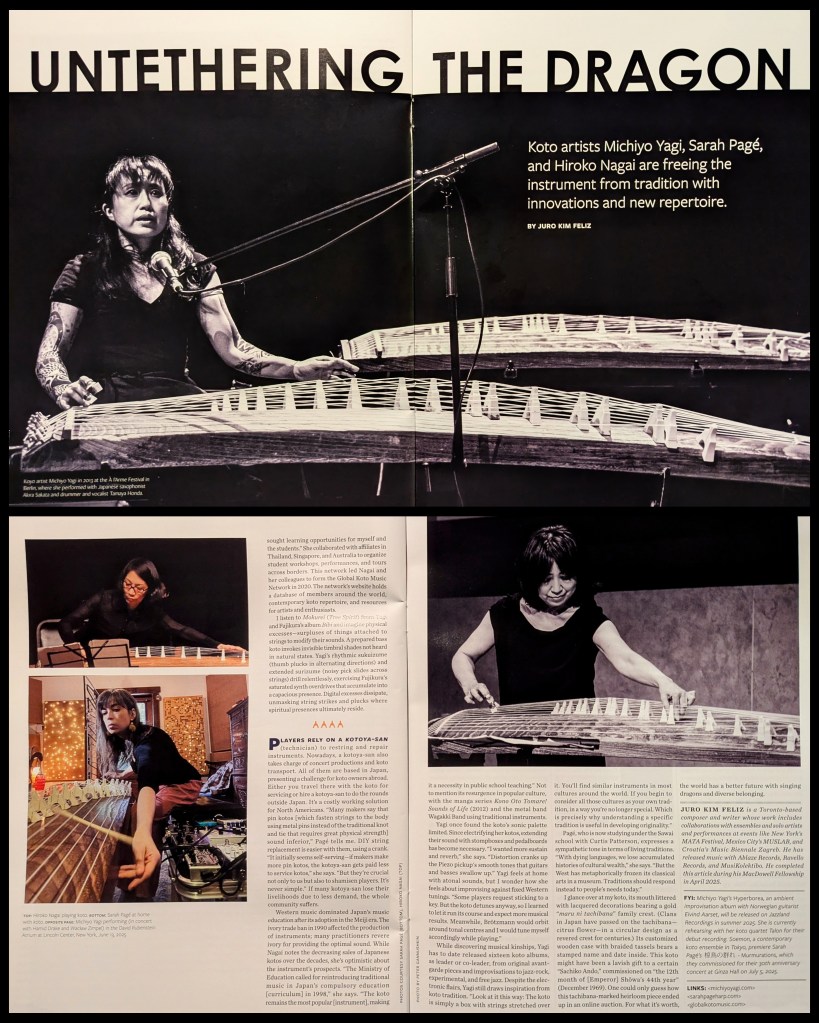
Untethering the Dragon
Published in Musicworks #151 (Summer 2025).
Check back later for online access.
Likened to a dragon, the koto — a Japanese zither — evolved from gagaku court music to innovations in modern instruments and avant-garde repertoire. Writer Juro Kim Feliz investigates the koto’s new-found belonging amid trade wars, diasporas, and a changing global world order. Electrifying the koto, Tokyo-based composer-performer Michiyo Yagi steps into the wild frontiers of free jazz, pushing the instrument’s limited sonic palette. Montreal-based harpist Sarah Pagé creates parallel ambient worlds with the harp and koto while valuing traditions. Manila-based anthropologist and performer Hiroko Nagai narrates a globalizing narrative with the Global Koto Music Network and the koto program at the University of the Philippines. Creating patchworks of futures, koto artists construct new solidarities out of traditional cultures in various places.
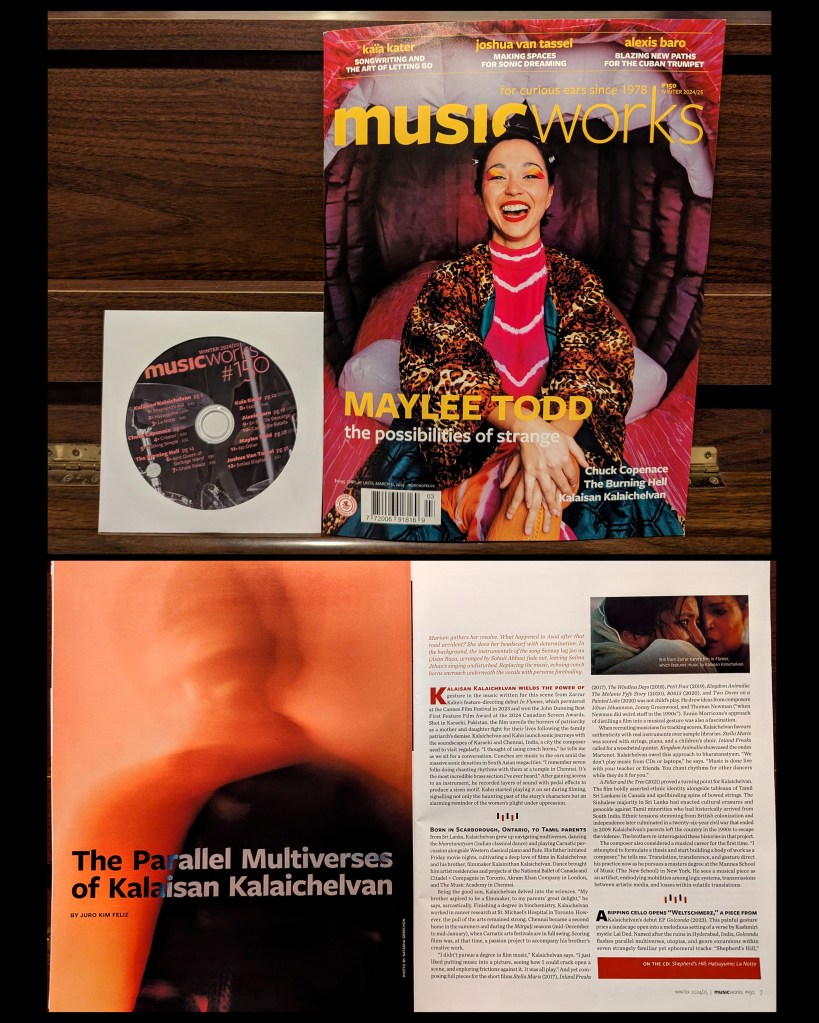
The Parallel Multiverses of Kalaisan Kalaichelvan
Short feature published in Musicworks #150 (Winter 2025). Profile photo by Natasha Gershon.
Check back later for online access.
Dancing the bharatanatyam and playing classical piano/flute to doing cancer research in a Toronto hospital and producing numerous film scores on the side — Canadian composer Kalaisan Kalaichelvan finally pivoted into a career of writing music for the concert stages. Juro Kim Feliz examines Kalaichelvan’s music, ranging from film scores to concert music, as they encompass real and imagined parallel multiverses with artifacts of translation and transference.
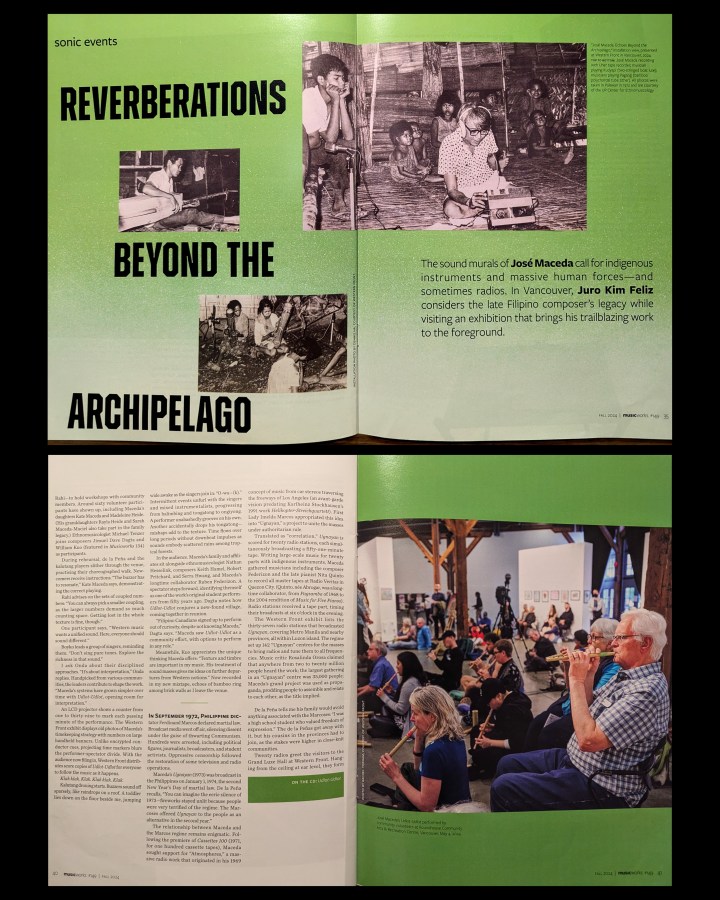
José Maceda: Reverberations beyond the Archipelago
Published in Musicworks #149 (Fall 2024). Photos courtesy of Western Front and the UP Center for Ethnomusicology.
Check back later for online access.
Broadcast radio and cassette tapes collide in the DIY worlds of mixtapes. Likewise, technologies collide with island pasts and futures in the avant-garde sound murals of Filipino composer José Maceda (1917-2004), calling for indigenous instruments and massive human forces – sometimes using radios or tape media. But what lies else beyond music and sound? Vancouver’s Western Front frames a bigger picture with the “Echoes Beyond the Archipelago” exhibition and a rendition of Maceda’s Udlot-Udlot (1975) in May 2024. Juro Kim Feliz asks curator Aki Onda and ethnomusicologist LaVerne de la Peña to translate Maceda’s artistic legacy into the decolonizing ethos of the 21st century.
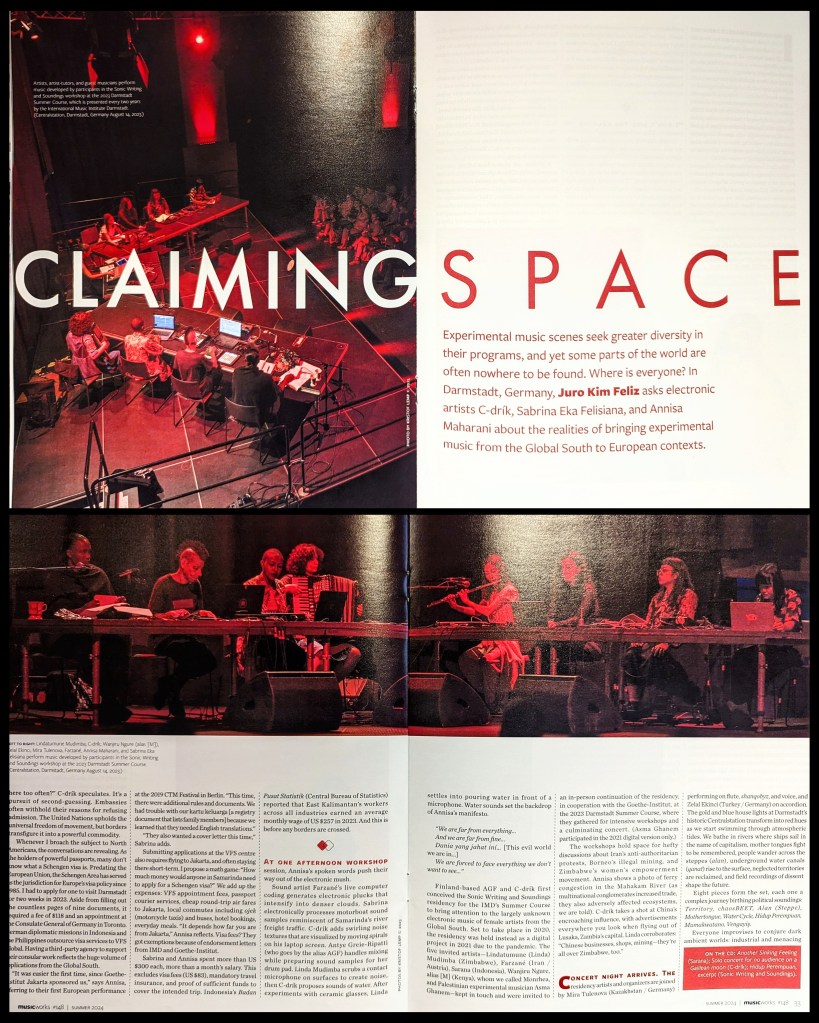
Claiming Space: Experimental Music from the Global South
Published in Musicworks #148 (Summer 2024). Photos by Kristof Lemp, courtesy of IMD Darmstadt.
Check back later for online access.
Experimental music scenes seek greater diversity in their programs, and yet some parts of the world are often nowhere to be found. Where is everyone? In Darmstadt, Germany, Juro Kim Feliz asks electronic artists C-drík and Sarana (Sabrina Eka Felisiana and Annisa Maharani) about the realities of bringing experimental music from the Global South to European contexts.
This redacted version of the article is originally written for the Internationales Musikinstitut Darmstadt Words on Music Course 2023, facilitated by Kate Molleson and Peter Meanwell.
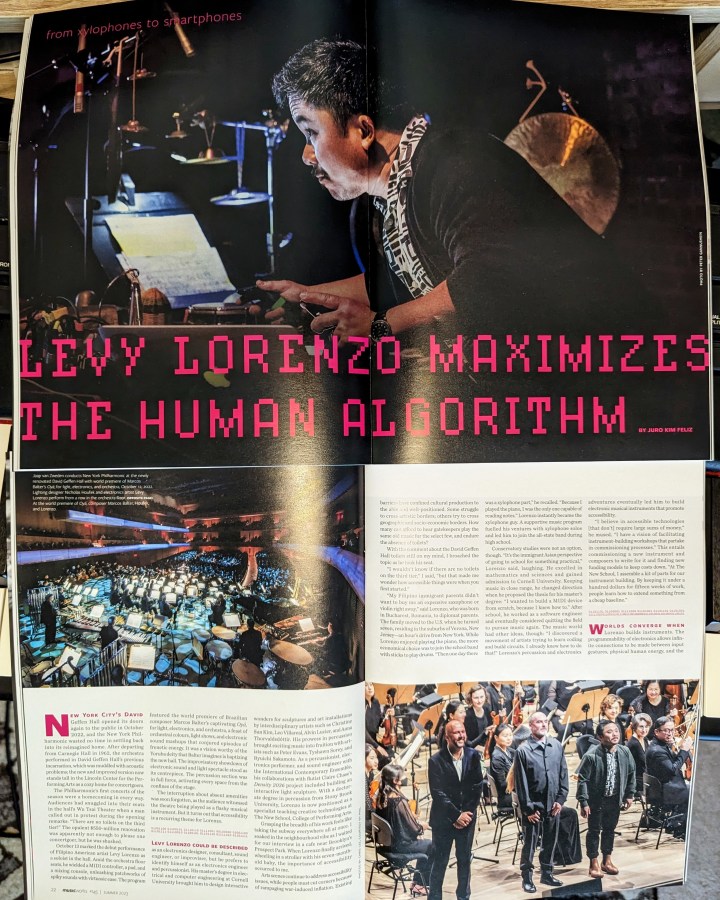
Levy Lorenzo Maximizes the Human Algorithm
Published in Musicworks #145 (Summer 2023).
Check back later for online access.
Percussion, electronic machines, interactive design: percussionist Levy Lorenzo handles them with ease. Lorenzo has collaborated with contemporary music figures, building highly versatile electronic instruments of his own and improvising on them. A minor disturbance at his debut performance with the NY Phil on October 2022 makes one think of how technology pursuits speak on accessibility. Juro Kim Feliz finds Lorenzo discussing his instrument building and performance practice while tying aspects of his artistic practice to his personal immigrant narrative. Embodying presence and sense of life with electronics, his instruments embodies presence to maximize the “algorithms” humans are already programmed to be as performers.
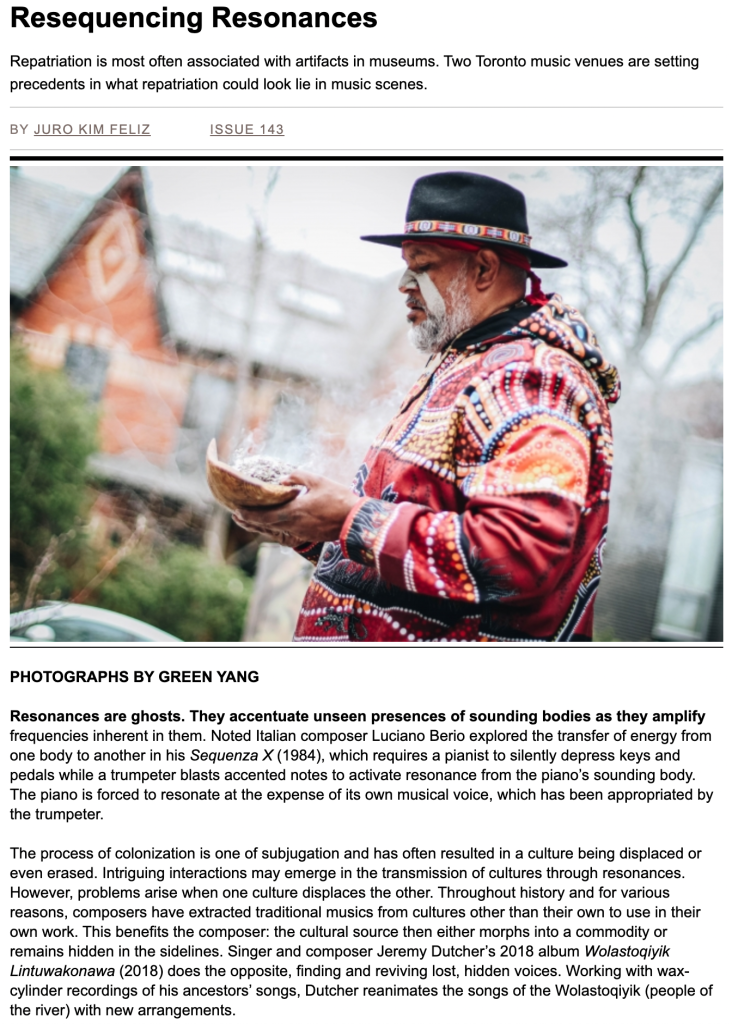
Resequencing Resonances
Published in Musicworks #143 (Fall 2022).
Read the full article HERE. Photos by Green Yang.
Musical repatriation remains elusive among reconciliation with indigenous peoples. People still associate it with museum artifacts housed under glass cases. However, two music venues set precedents in showing what this could look like in music scenes. Toronto’s Tranzac Club discovers hidden Australian aboriginal items in their storage rooms—lore man Goombine facilitates their return to Australia. Under an Indigenous Advisory Council, the Canadian Music Centre rectifies Indigenous appropriation in its catalogue of Canadian works. With Goombine, opera singer Marion Newman, and scholar Jeremy Strachan, Juro Kim Feliz juxtaposes the Tranzac ceremony with conversations on creative responsibility as re-sequencing resonances of the past enables resounding futures.
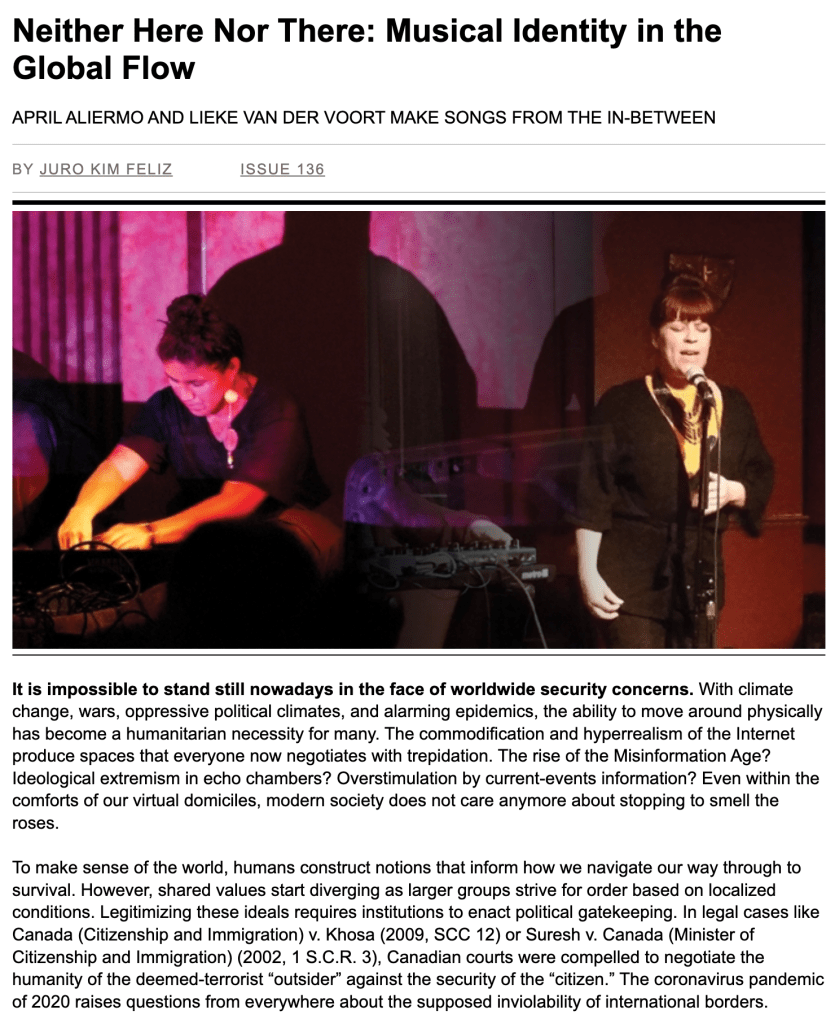
Neither Here Nor There: Musical Identity in the Global Flow
Published in Musicworks #136 (Spring 2020). Read the full article HERE.
As global economies propel the mobility and displacement of people, the world oscillates between drawing borders and erasing them. Juro Kim Feliz weaves the thoughts of sound artist April Aliermo and composer Lieke van der Voort as negotiations between practices and lived experiences inhabit their sound worlds. Their stories question systemic permanence: Aliermo with her culture shock in Darmstadt, and van der Voort with her disdain on gatekeeping and invisibility. Their work forges a need to repetitively understand being “in-between,” being neither here nor there.
Journal publications, long-form articles
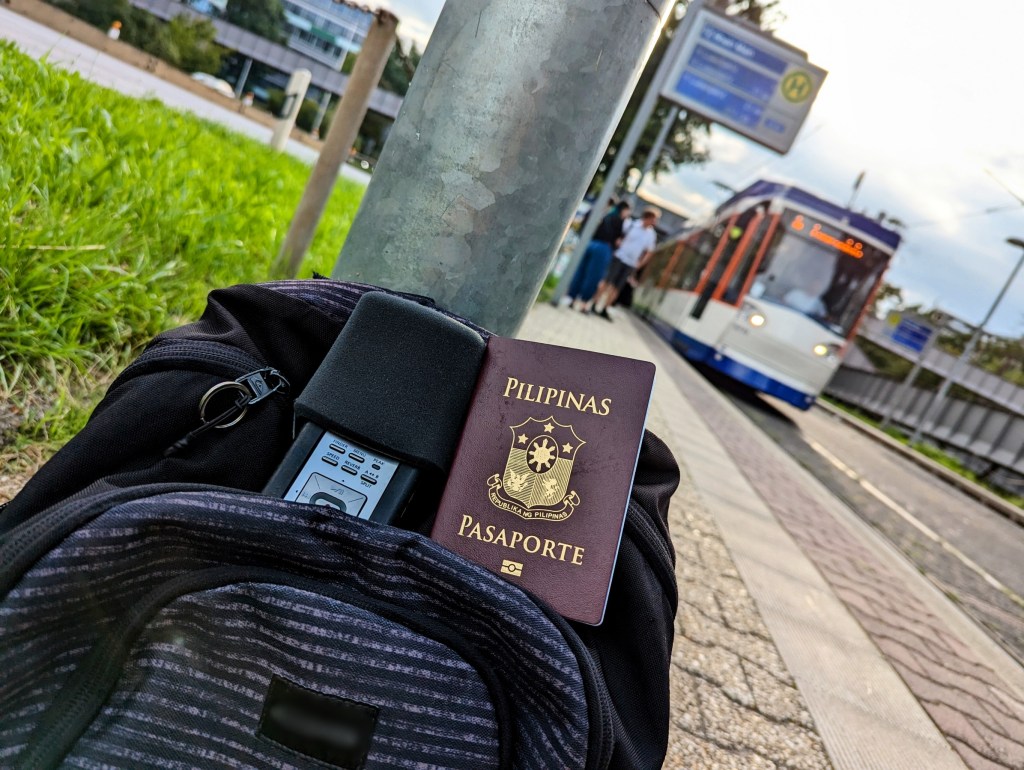
Getting a visa towards arts diversity
Written under the “Words on Music” journalism course at the Internationales Musikinstitut Darmstadt (2023). Special thanks to Kate Molleson and Peter Meanwell.
Read the full article HERE.
Present-day contemporary music scenes call for greater diversity, and yet the rest of the world is nowhere to be found. Where is everyone else? Should arts curation do better to expose the world or is there something missing? With passport on hand, Juro Kim Feliz interrogates the challenges faced with border crossings and acquiring visibility over the canvas of today’s geopolitics. Gathering for the Sonic Writing and Soundings residency at Darmstadt in 2023, C-drík, Duo Sarana, and other artists chime in to lay bare the realities of coming from the so-called “Global South” — things what many with greater privilege in mobility might not have known otherwise.
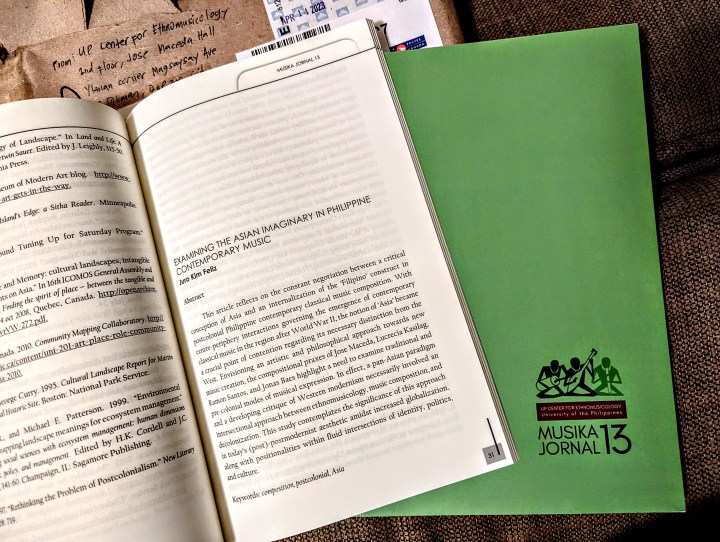
Examining the Asian Imaginary in Philippine Contemporary Music
Published in Musika Jornal 13 (2021)
No available online access; buy the journal publication HERE.
Juro Kim Feliz reflects on negotiating between a conception of Asia and the ‘Filipino’ construct in postcolonial Philippine contemporary classical music. With centre-periphery interactions governing contemporary music in the region after World War II, ‘Asia’ became a point of contention regarding its distinction from the West. The works of Jose Maceda, Lucrecia Kasilag, Ramon Santos, and Jonas Baes highlighted a need to examine traditional and pre-colonial modes of expression. A resulting pan-Asian paradigm and critique of Western modernism involved intersections between ethnomusicology, composition, and decolonization. This study contemplates this approach in today’s (post)-postmodernist aesthetic amidst increased globalization, along with intersections of identity, politics, and culture.
 Juro Kim Feliz